Beginners lose a lot of golf balls. That’s not a criticism-it’s just the reality of learning a sport where the ball regularly ends up in water, rough, and woods. It means the most important quality in a beginner golf ball isn’t spin performance or compression optimization. It’s that you can afford to lose several of them in a round without wincing every time.
Beyond price, beginners benefit from soft, low-compression balls that are more forgiving on off-center strikes, fly straighter with reduced sidespin from mishits, and feel better at slower swing speeds. The premium tour balls that better players use-Pro V1, TP5, Chrome Soft-are engineered for high swing speeds and precise control. For beginners, they don’t provide any meaningful advantage and cost significantly more per sleeve.
This guide covers five of the best golf balls for beginners on Amazon right now, across different price tiers and priorities. If you’ve already been thinking about what equipment makes sense for new golfers, our broader guide to the best golf balls covers options across all skill levels and swing speeds.
FTC Disclosure: This article contains affiliate links. We may earn a commission if you buy through them, at no extra cost to you.
Quick picks
| Pick | Best for | Compression | Standout feature |
|---|---|---|---|
| Callaway Supersoft (2025) | Best overall beginner ball | Ultra-low (38) | The softest feel in the category, forgiving on mishits |
| Titleist TruFeel | Best Titleist option for beginners | Low | Titleist quality at an accessible price for new players |
| Srixon Soft Feel | Best value soft ball | Low (60) | Consistent quality at a competitive price per dozen |
| Wilson Duo Soft | Best budget pick | Ultra-low (29) | Claimed world’s softest ball, great price for practice use |
| Titleist Velocity | Best for beginners who prioritize distance | Mid | High-speed design for maximum distance off the tee |
The 5 best golf balls for beginners
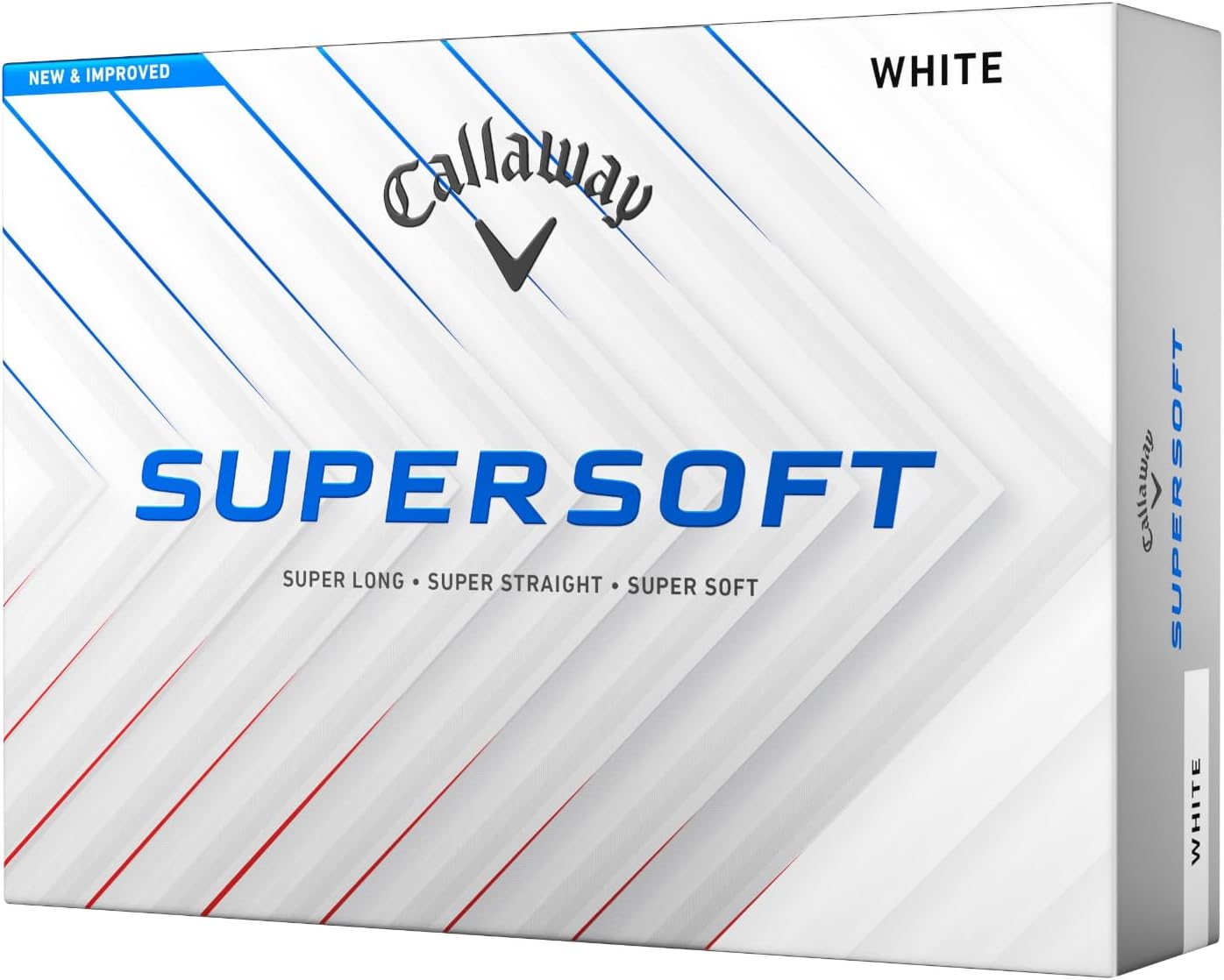
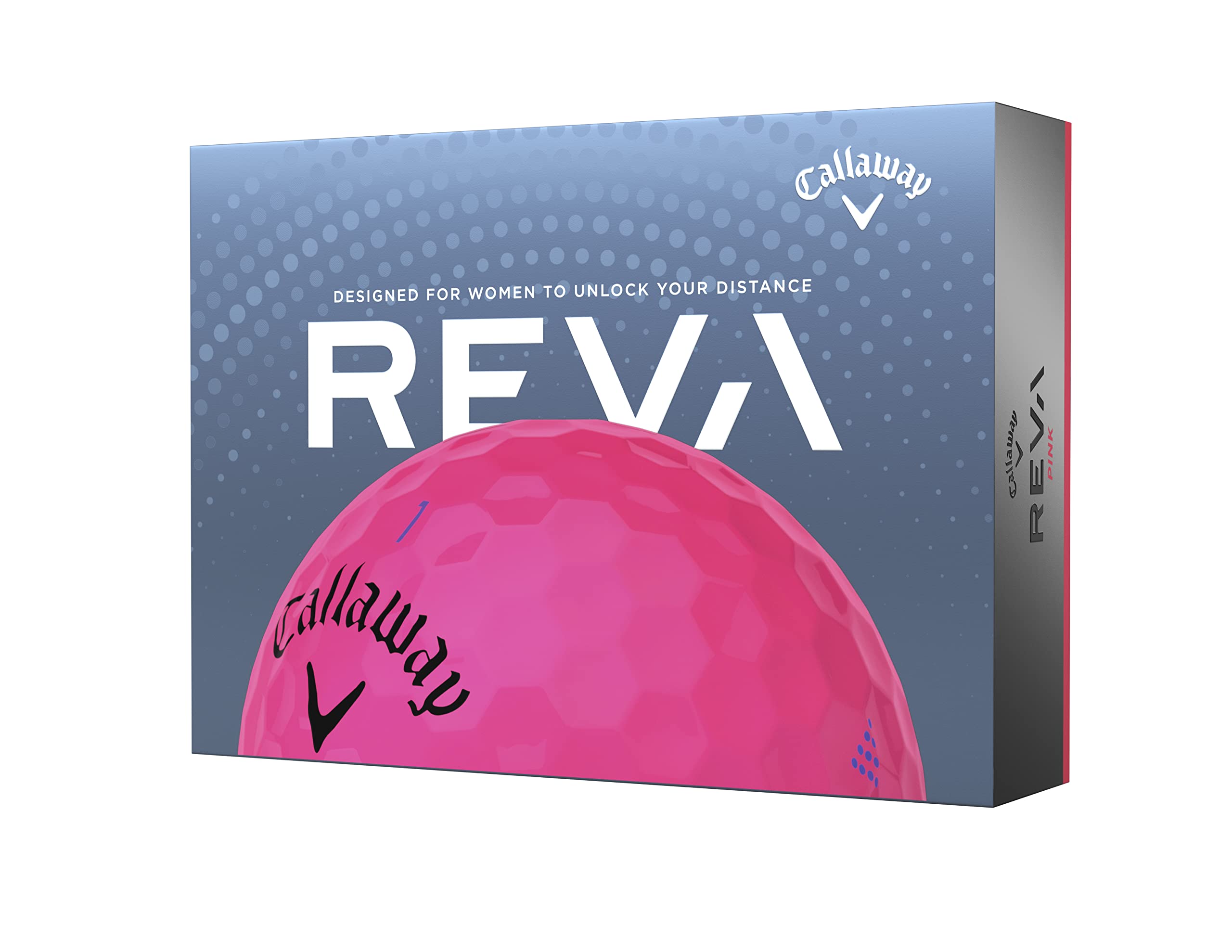
1) Callaway Supersoft (2025) – Best overall golf ball for beginners
The Callaway Supersoft has been the go-to recommendation for beginner and high-handicap golfers for years, and the 2025 version continues that tradition. At a compression rating of 38-among the lowest of any ball on the market-it’s specifically engineered to maximize performance at slower swing speeds. For most beginners who haven’t yet developed the clubhead speed to compress a premium ball properly, the Supersoft provides better distance and more consistent ball flight than harder, higher-compression options.
The soft feel isn’t just a marketing claim. It translates into a genuine difference in how approach shots and short game shots respond-the ball compresses more on contact, which makes it easier to control wedge shots without them jumping off the club face unexpectedly. The Supersoft’s hex aerodynamics pattern also helps reduce drag and sidespin, which is directly relevant for beginners who are still working on a straight ball flight. This is the ball that shows up most consistently in beginner recommendations for a reason: it’s genuinely engineered for the skill set of newer players, not just repriced.
- Ultra-low compression (38): Maximizes distance and feel for slower swing speeds-exactly what most beginners need.
- Soft feel throughout the bag: Easier to control on short game shots and approach play where touch matters.
- Hex aerodynamics: Reduces drag and helps keep mishits from ballooning or slicing excessively.
- Extremely well-reviewed: One of the most purchased beginner golf balls available, with thousands of reviews backing consistent quality.
- Good price per dozen: Not the cheapest option, but solid value relative to the quality delivered.
Best for: Most beginners and high-handicap golfers who want the most forgiving, soft-feeling ball available from a major brand at a reasonable price. The safest starting recommendation for new players.
Worth knowing: The Supersoft is designed for feel and forgiveness over maximum distance. If your primary goal is hitting the ball as far as possible-and you swing harder than average-the Titleist Velocity may put more yards in your pocket.
See Current PriceOpens Amazon. Affiliate link.
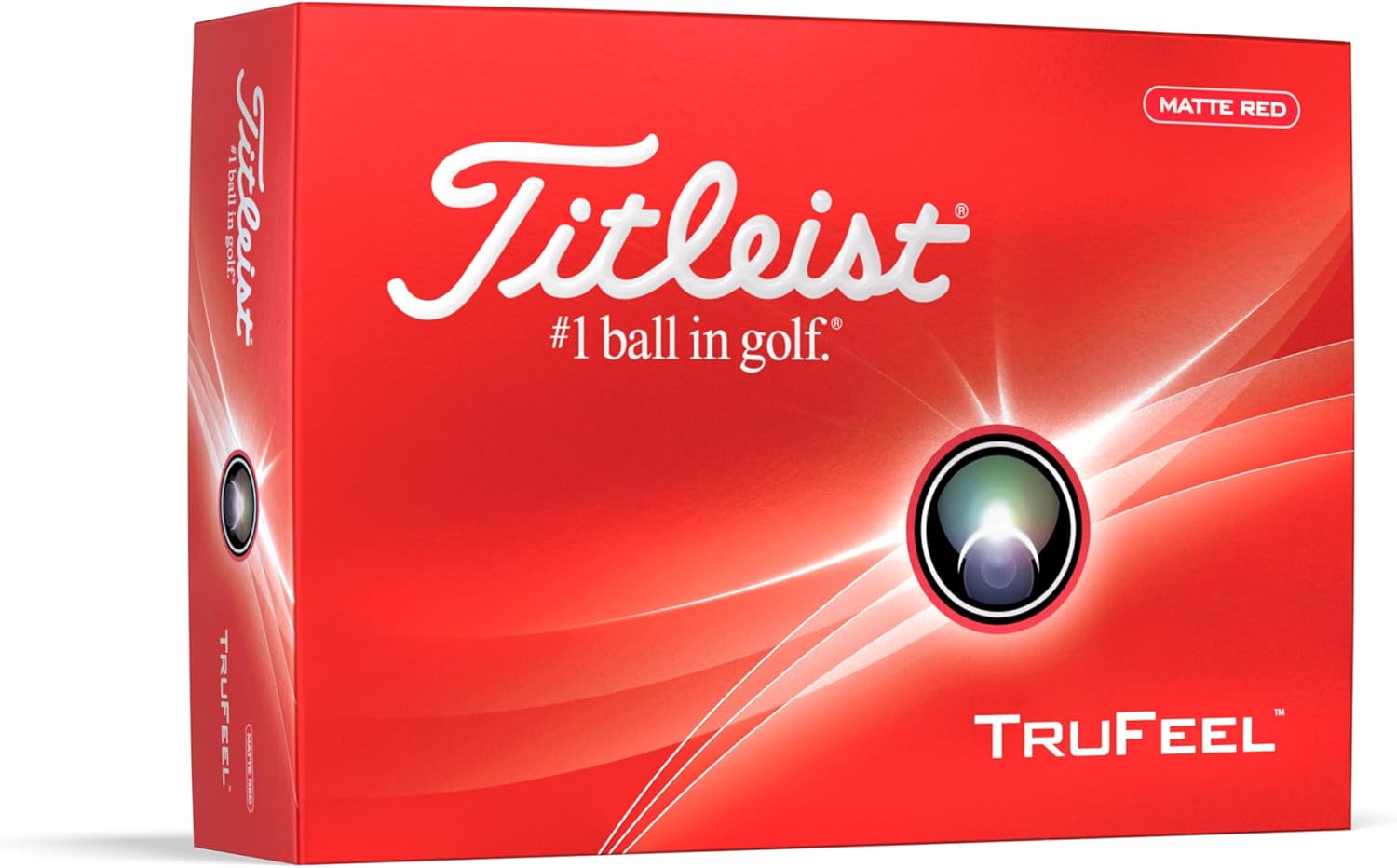
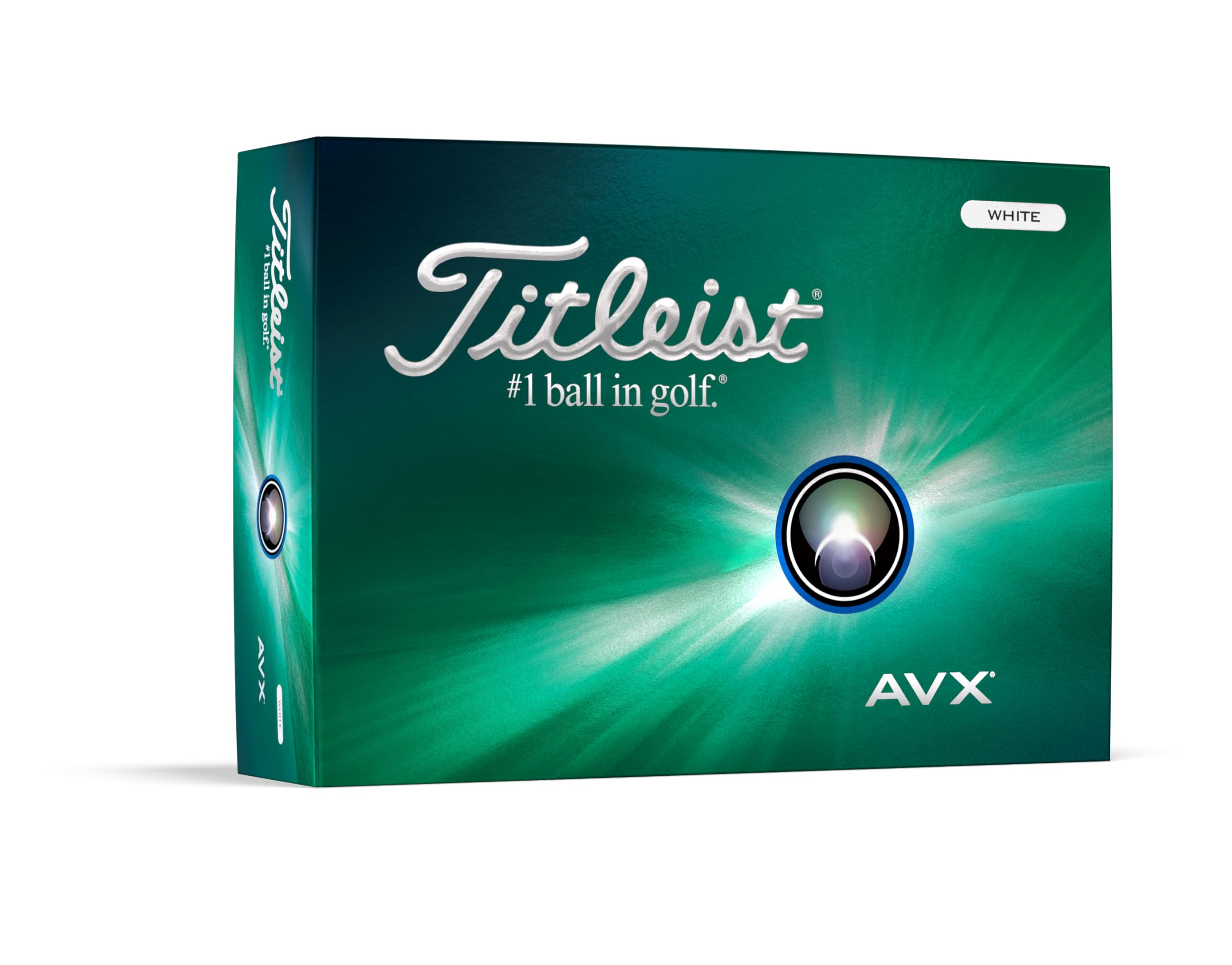
2) Titleist TruFeel – Best Titleist ball for beginner golfers
Titleist makes the Pro V1-the ball used by more professional golfers than any other. That brand credibility matters to a lot of golfers, but the Pro V1 is not a beginner ball. It’s a high-compression, high-spin ball optimized for players with fast swing speeds and precise ball-striking. The TruFeel is Titleist’s answer for players who want the brand without paying for a tour ball that won’t suit their game.
The TruFeel is a soft, low-compression, two-piece ball designed specifically around feel and forgiveness rather than maximum spin control. Compared to the Supersoft, it offers a slightly different feel-Titleist tends toward a firmer soft compared to Callaway’s ultra-soft character-but it delivers the consistent quality control and durability that makes Titleist a trusted name across skill levels. For beginners who specifically want to play a Titleist and aren’t ready for the Pro V1, this is the right ball in the lineup.
- Titleist quality at an accessible price: Consistent manufacturing standards applied to an entry-level ball-not a compromised product.
- Low compression, soft feel: Engineered for feel and forgiveness at higher handicap swing speeds.
- Better durability than some budget options: Titleist’s cover durability tends to hold up well across a full round even on mishits.
- Clean flight: Aerodynamics designed to reduce drag and promote a penetrating ball flight even for moderate swing speeds.
- Good short game response: More short game control than harder distance balls while staying price-accessible.
Best for: Beginners who specifically want to play Titleist and prefer a slightly firmer feel than the Callaway Supersoft. Also good for players who care about durability and brand trust in their ball choice.
Worth knowing: The TruFeel sits between the Supersoft and a tour ball in terms of character. If you want the absolute softest feel available, the Supersoft or Wilson Duo Soft go further in that direction. If you want to eventually transition to a tour ball as your game develops, the TruFeel is a reasonable stepping-stone that keeps you in the Titleist ecosystem.
Check PriceOpens Amazon. Affiliate link.
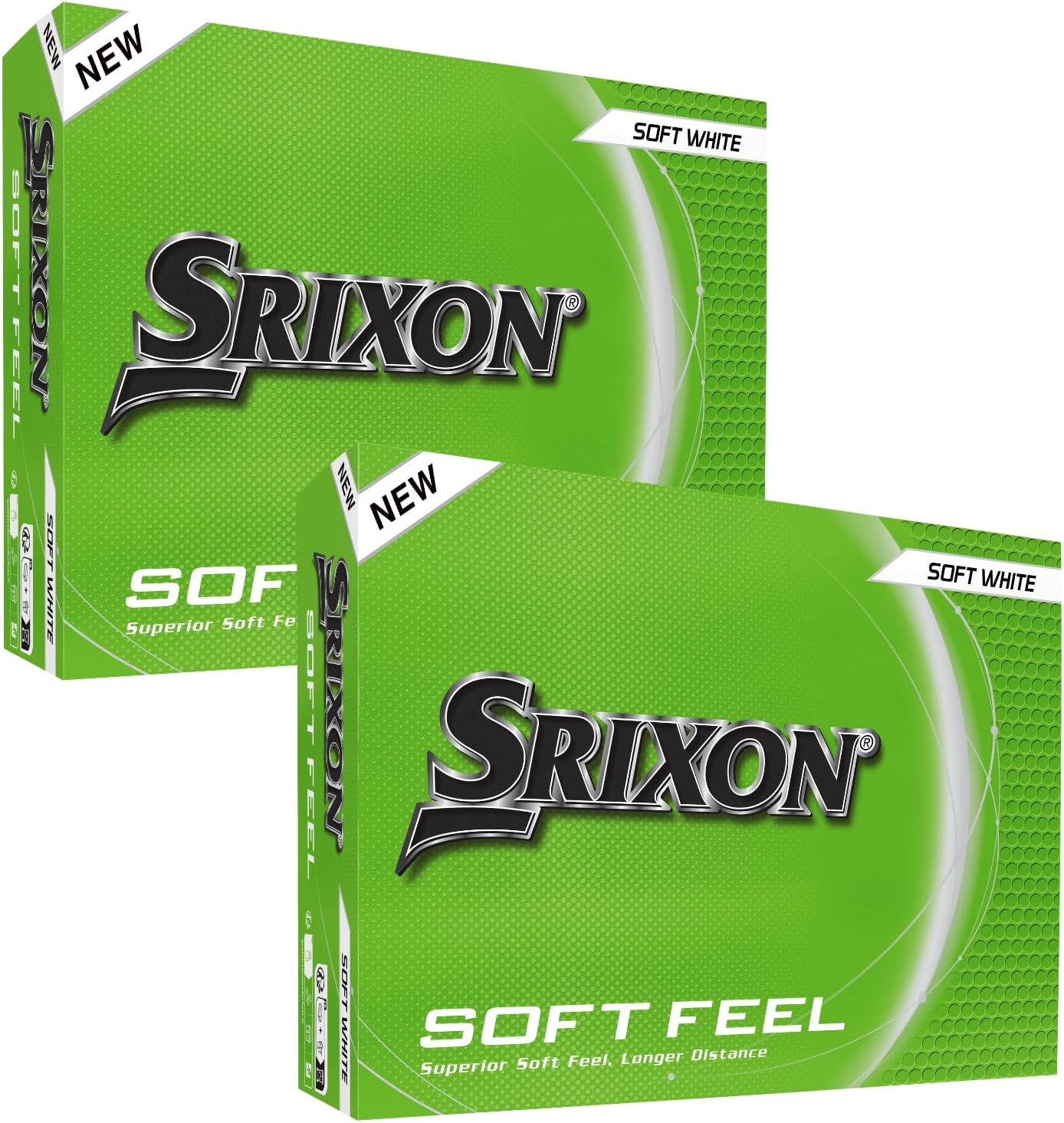
3) Srixon Soft Feel – Best value soft ball for beginners
Srixon doesn’t get the retail visibility of Callaway or Titleist, but the Soft Feel is a consistently respected ball in the beginner-to-mid-handicap category for one specific reason: it delivers genuinely good performance at a price that makes buying multiple dozens in a season feel reasonable. For beginners who are still in the phase where they’re losing several balls per round, price per dozen matters a lot in the aggregate.
The Soft Feel uses a low compression core (compression 60, lower than many two-piece balls) with Srixon’s 338-speed dimple pattern for consistent flight. The ionomer cover is durable enough to survive the kind of contact that beginner balls regularly take-shots off cart paths, mishits on bare lies, the occasional tree. It doesn’t have the ultra-soft character of the Supersoft, but it’s softer than most mid-range balls and provides better feel feedback than pure distance balls. For the price, it’s a genuinely difficult option to beat on pure value-for-performance terms.
- Competitive price per dozen: Good economics for beginners who are losing multiple balls per round-reduces the financial sting of lost ball fees.
- Low compression core: Soft enough to benefit beginners and high-handicap players without going as extreme as the Supersoft.
- 338-speed dimple pattern: Consistent aerodynamics that promote straight, penetrating ball flight for high-handicap swing paths.
- Durable ionomer cover: Holds up to the mishits that beginners frequently produce.
- Srixon consistent quality control: A reputable equipment brand that takes manufacturing standards seriously across their ball lineup.
Best for: Budget-conscious beginners who still want a quality soft ball from a real golf brand. Good for players who go through multiple dozens per season and want to keep the per-round cost of ball loss manageable.
Worth knowing: The Soft Feel isn’t as ultra-soft as the Supersoft or Duo Soft. Players who are specifically chasing the softest possible feel will prefer Callaway or Wilson. For balanced soft-and-durable at a good price, Srixon wins.
See ReviewsOpens Amazon. Affiliate link.
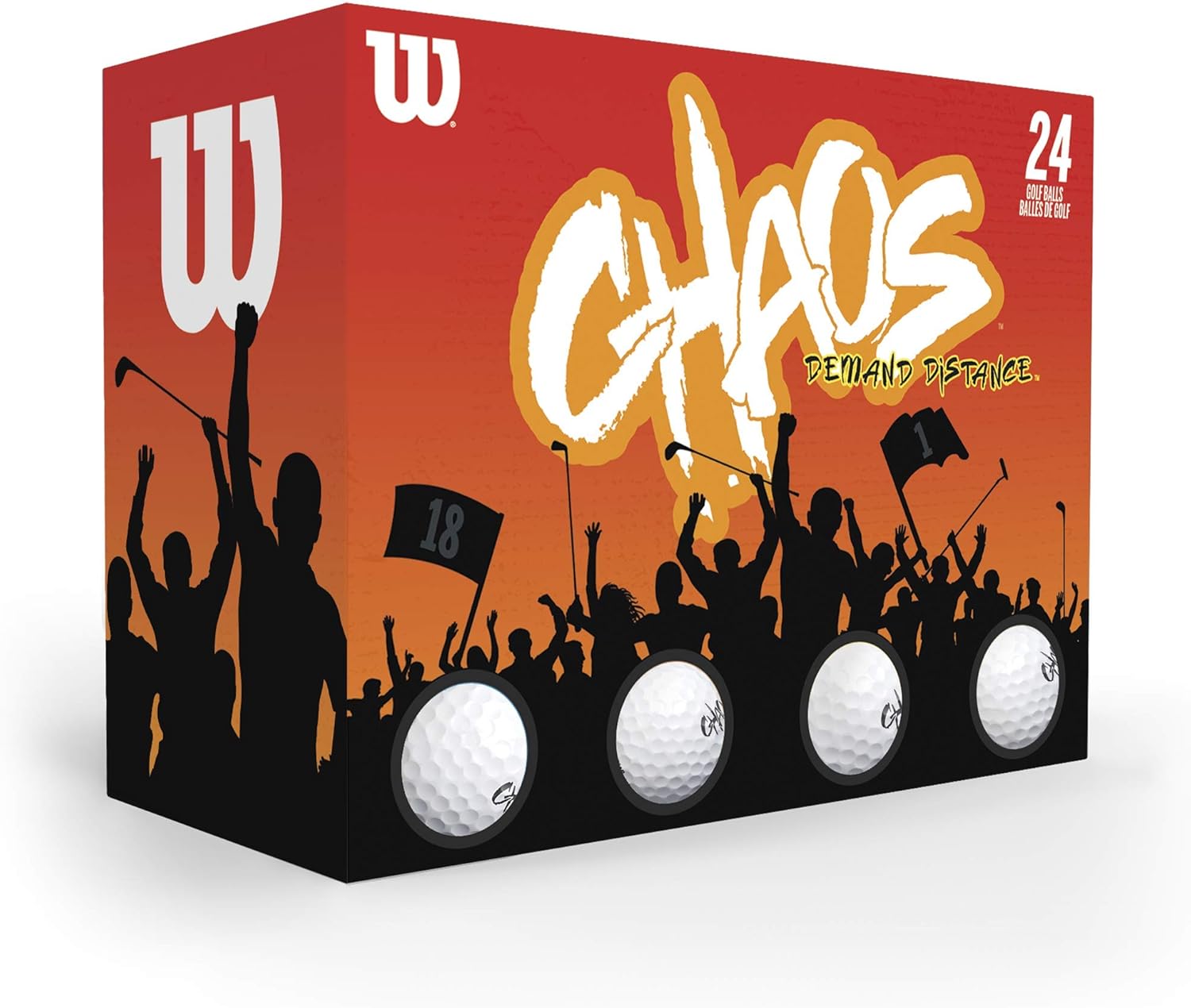
4) Wilson Duo Soft – Best budget golf ball for beginners
Wilson claims the Duo Soft is the world’s softest golf ball, and with a compression rating of 29-the lowest on this list and among the lowest available anywhere-that claim is credible. For beginners with slower swing speeds, that level of softness translates to better energy transfer at contact, which means more ball speed from a slower swing. It also means the absolute most forgiving feel on mis-strikes, which beginners encounter constantly.
The Duo Soft is also priced at the bottom of the major-brand beginner ball market. For players who are still in the early phase of learning-where losing four or five balls in a round is a normal outcome-the economics of the Duo Soft make it easy to keep a good supply without the financial pressure of using more expensive options. Wilson is a legitimate, established golf brand, not a no-name budget product, and the Duo Soft delivers consistent quality for what it is.
- Claimed world’s softest golf ball (compression 29): Extreme low compression that maximizes feel for very slow swing speeds and provides the most forgiving mishit response.
- Lowest price among major-brand options: Best economics for beginners who are losing multiple balls per round and need quantity.
- Wilson brand reliability: A long-established golf equipment company with consistent quality standards.
- Straight flight for mishits: The very soft construction reduces side spin on off-center hits-helps keep bad swings from becoming very bad shots.
- Good for practicing short game: The ultra-soft feel gives beginners better feedback on chip and pitch shots while they’re developing touch.
Best for: Beginners on a tight budget who want maximum softness from a real golf brand. Also ideal for players with very slow swing speeds (seniors, junior golfers) who benefit most from extreme low compression. Good for practice rounds and range sessions.
Worth knowing: The very low compression means the Duo Soft doesn’t perform as well for higher swing speed players. If you’re a beginner with a naturally fast swing, you may actually lose distance with this ball. The Callaway Supersoft or Srixon Soft Feel is more versatile across different swing speeds.
See Current PriceOpens Amazon. Affiliate link.
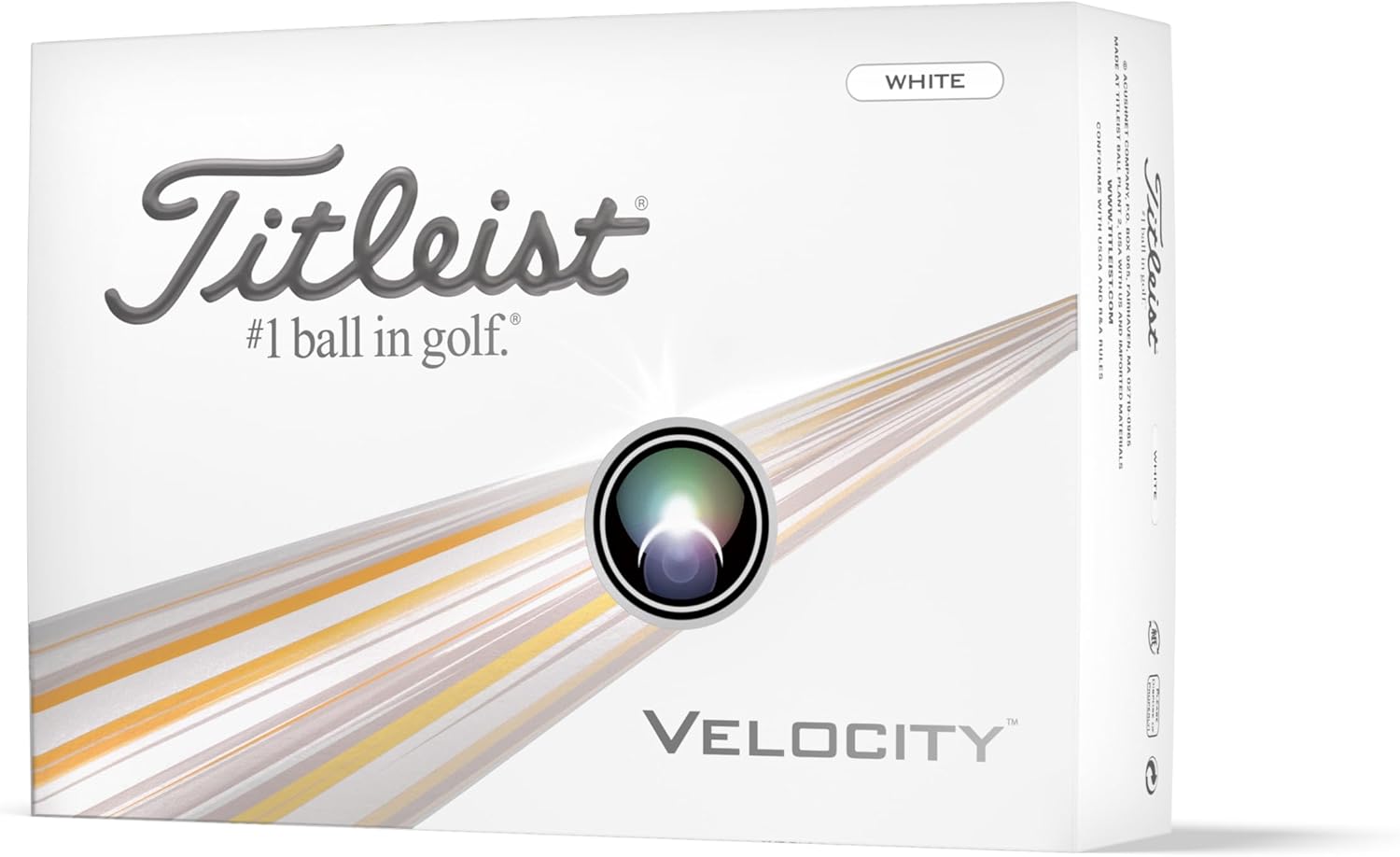
5) Titleist Velocity – Best beginner golf ball for distance
Not every beginner’s top priority is feel. Some newer golfers-particularly those who come in with athletic backgrounds or naturally fast swing speeds-want to hit the ball as far as possible first, and develop finesse later. For that priority, the Titleist Velocity is the strongest pick on this list. It’s a two-piece ball built explicitly around high initial ball speed and maximum distance through its NAZ+ core technology, which generates fast speeds across a wider range of swing speeds than most distance balls.
The Velocity is firmer than the other balls on this list-that’s how it generates the speed it does. But for beginners who swing harder than average or who prioritize long drives as part of their game, the trade-off in feel is worth it. Titleist’s construction quality and aerodynamics mean the Velocity flies consistently and durably, and the reduced driver spin helps keep tee shots from ballooning. For a certain type of beginner, this is the more honest recommendation than pushing them toward a soft ball that doesn’t suit their game.
- NAZ+ high-speed core: Engineered specifically for maximum ball speed and distance across a range of swing speeds.
- High flight and low driver spin: Promotes a penetrating, high-launching driver trajectory for more carry and roll.
- Titleist manufacturing quality: Consistent construction and durability from the most trusted name in golf balls.
- Good for stronger beginner swingers: Works better for players with naturally faster swings than ultra-low-compression balls that may produce less distance at higher speeds.
- Straightforward two-piece design: Simple construction is appropriate for beginners who don’t yet need or benefit from multi-layer ball engineering.
Best for: Beginners with faster-than-average swing speeds who prioritize distance and want a Titleist ball that’s actually engineered for their game. Also good for players who find ultra-soft balls feel too mushy or unresponsive.
Worth knowing: The firmer feel of the Velocity means short game control is reduced compared to the soft balls above. For beginners who are actively working on chipping, putting feel, and approach play, the softer options will give better feedback during that learning process.
Check PriceOpens Amazon. Affiliate link.
What to look for in a golf ball for beginners
Compression: the most important specification for beginners
Compression describes how much a ball deforms when struck. Low-compression balls (below 70) are more forgiving at slower swing speeds because they compress more easily at contact-meaning you don’t need to generate as much clubhead speed to get good energy transfer into the ball. For beginners whose swing speeds are typically under 90 mph, low compression is directly relevant to both distance and feel. The Callaway Supersoft (38), Wilson Duo Soft (29), and Srixon Soft Feel (60) are all low-compression options that benefit this swing speed range.
Durability
Beginners hit the ball on irregular trajectories, into carts, trees, and cart paths. A ball that scuffs on every off-center hit or loses its cover after two holes isn’t serving you well regardless of how it feels when struck perfectly. All five picks on this list come from established brands with reasonable durability standards. Avoid ultra-cheap no-brand balls that promise similar specs-the cover quality difference shows up quickly.
Price per dozen
The honest math of beginner golf: if you lose four balls in a round and you’re playing with Pro V1s at $55 a dozen, you’re losing more money in balls than many beginners spend on their entire round of golf. Price per dozen matters, and there’s no shame in optimizing for it during the early learning stage.
Soft vs distance golf balls: which should a beginner choose?
This is the most common comparison beginners face when buying their first serious box of golf balls, and the honest answer depends on one question: what is your swing speed?
If your swing speed is under 85 mph-which is where most beginners start-soft, low-compression balls are the better choice. The Callaway Supersoft, Titleist TruFeel, Srixon Soft Feel, and Wilson Duo Soft will all produce better distance and better feel than harder distance balls at that swing speed range.
If your swing speed is over 90 mph-which is less common for beginners but does happen with athletic players-distance balls like the Titleist Velocity may actually put more yards on your shots, because harder-core balls need higher swing speeds to be compressed properly.
If you’re unsure of your swing speed, most golf facilities can measure it during a launch monitor session. As a rough guide: if your driver carries consistently under 200 yards, you’re likely better off with a soft ball.
Common mistakes beginners make when buying golf balls
- Buying Pro V1s or other tour balls. Tour balls are engineered for swing speeds above 100 mph with precise ball-striking. For beginners, they often produce less distance, more spin on mishits (making slices worse), and cost significantly more per ball lost. Save the tour balls for when your game justifies them.
- Going with the absolute cheapest option available. There’s a floor below which ball quality genuinely matters. No-name ultra-budget balls often have unpredictable flight, poor durability, and inconsistent feel. All five picks on this list are from real golf brands with actual quality standards.
- Buying one dozen and treating them like rare commodities. Beginners who are too precious about their ball condition often hesitate to take the right shot or end up frustrated after each loss. Buy three or four dozen of a value option and play freely.
- Prioritizing color or appearance over specification. Colored and high-visibility golf balls are genuinely useful for beginners who lose track of the ball in rough-but don’t choose a color ball from a brand or compression that doesn’t match your game just for aesthetics.
- Switching balls too often. If you’re trying a different ball every round, you lose any feel calibration you were developing. Pick one ball and stick with it for at least a full month of play before evaluating.
Q&A
What golf balls should a beginner use?
Beginners should use soft, low-compression golf balls from established brands. The Callaway Supersoft is the most consistently recommended starting point. The Wilson Duo Soft is the best budget option. Either will serve a new player much better than a premium tour ball.
Should beginners use soft or hard golf balls?
Soft balls are almost universally better for beginners. Lower compression soft balls maximize distance at slower swing speeds, reduce sidespin on mishits (which helps with slice and hook tendencies), and provide better feel feedback for learning short game touch. Hard balls are engineered for high-swing-speed players and provide no benefit for most beginners.
Is there a difference between cheap golf balls and expensive ones for beginners?
Yes, but not in the direction beginners usually expect. For beginners, a well-designed soft ball in the $25-$35 per dozen range outperforms a $55-per-dozen tour ball. The expensive ball isn’t better for new players-it’s designed for a different game. The difference between a $15 no-name ball and a $30 major-brand soft ball is more relevant than the difference between brands at the same price tier.
How many golf balls should a beginner bring per round?
At minimum, six to nine. On a difficult course or a day with water hazards, twelve isn’t excessive. Buy in quantity, price accordingly, and don’t let ball loss anxiety affect your decision-making on the course.
Do golf balls make a difference for beginners?
Ball compression does make a measurable difference-a soft, low-compression ball will fly further and feel better than a hard tour ball for a slow-swing-speed player. Brand-to-brand differences among well-designed beginner balls are much smaller. The most important variable for beginners isn’t which soft ball they choose-it’s that they’re playing a soft ball instead of a tour ball.
Bottom line
For the safest all-around recommendation, start with the Callaway Supersoft (2025). It’s genuinely built for the game most beginners are playing, from a brand that understands the category. Titleist loyalists should start with the Titleist TruFeel instead of reaching for the Pro V1. Budget-focused players get strong value from the Srixon Soft Feel, and the absolute most affordable option from a real brand is the Wilson Duo Soft. And for beginners who swing hard and want maximum distance from day one, the Titleist Velocity is the pick built for that goal.
Pick one, buy a few dozen, and play. The best golf ball for a beginner is whichever one gets you out on the course more often.