If you are shopping for the best low spin golf balls, the goal is usually simple: hit straighter drives, keep flight from ballooning, and squeeze out a little more distance. A lower-spin ball will not fix a broken swing, but it can flatten trajectory, reduce sidespin, and create more rollout on solid tee shots.
The trick is finding one that helps off the tee without becoming useless around the greens. The best low spin golf balls keep driver spin down while still giving you enough feel and control to play normal golf.
Disclosure: This article may contain affiliate links. If you buy through them, we may earn a commission at no extra cost to you.
Quick picks
| Pick | Best for | What stands out | Link |
|---|---|---|---|
| Titleist AVX | Best overall | Low long-game spin with better short-game touch than most distance-first balls | See Current Price |
| Titleist Velocity | Best for raw speed | Fast, high-launching, low-spin distance ball that still feels lively | Check Price |
| TaylorMade Distance+ | Best budget pick | Simple, affordable, driver-friendly performance | See why I like it |
| Callaway Superhot | Best for moderate swing speeds | Easy speed and a friendlier feel than many cheap low-spin balls | Read the take |
| Srixon Soft Feel | Best soft-feel option | Softer impact with a straighter-flight bias for everyday golfers | See details |
Best low spin golf balls in 2026
Best overall
Titleist AVX
Titleist AVX is the best overall pick because it delivers the main benefit golfers want from this category,lower driver spin,without turning into a one-dimensional distance ball. It launches flatter than many premium models, holds up well in the wind, and still gives you the soft feel and short-game control that cheaper low-spin balls usually sacrifice.
That balance is what separates AVX. Many low-spin balls look good with the driver, then feel too firm on chips, pitches, and putts. AVX is much more complete. It feels muted off the putter, predictable on partial wedges, and premium throughout the bag.
It is best for golfers who create too much spin with the driver, fight a floaty ball flight, or want a more penetrating trajectory without giving up touch around the green. The obvious downside is price. But if you want one ball that can straighten the long game and still behave like a premium ball on scoring shots, AVX is the cleanest answer here.
See Current PriceOpens Amazon. Affiliate link.
Best for raw speed
Titleist Velocity
Velocity is the pick for golfers who care most about easy distance. It is built for speed, high launch, and low long-game spin, which is a useful combination for players whose drives climb too much or lose efficiency because they spin excessively.
You are not buying Velocity for delicate wedge play. Around the greens it is less refined than AVX, and that is the trade. In return, you get a lively-feeling distance ball that is simple to understand: hit it hard, launch it high, and let the lower spin help keep tee shots more efficient.
It is also a good fit for golfers who want a Titleist ball without paying premium-ball pricing. If your priority list starts with driver performance and ball speed rather than greenside finesse, Velocity is one of the most straightforward choices in this category.
Check PriceOpens Amazon. Affiliate link.
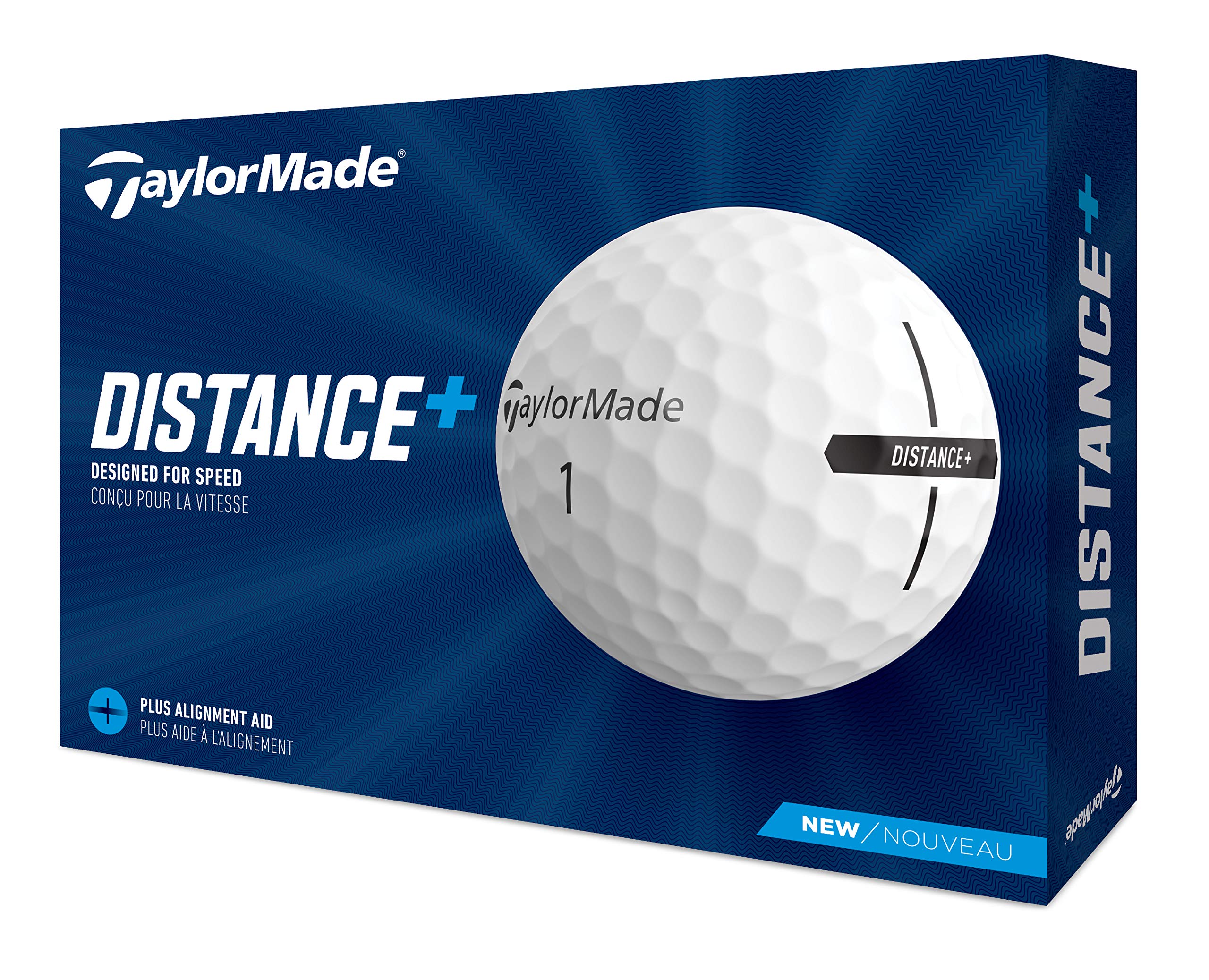
TaylorMade Distance+
TaylorMade Distance+ is the best budget option because it does the important part honestly: it helps reduce excess spin off the tee, keeps flight reasonably strong, and costs far less than premium balls. If you mainly want straighter drives and cheaper rounds, it makes a lot of sense.
This is not a short-game specialist. It feels firmer than the top premium picks, and greenside control is basic. But for high handicaps, casual players, and anyone who loses a few balls per round, that may be a very fair trade.
There is also a practical advantage to cheaper golf balls: golfers tend to swing more freely when they are not worried about donating $5 balls to the trees. That confidence matters. If budget is part of the decision, Distance+ is one of the easiest recommendations on the board. For more cheap-ball options, this budget golf ball guide is worth a look.
Callaway Superhot
Callaway Superhot is the best fit for many moderate swing speeds because it offers helpful distance characteristics without feeling overly harsh. It launches easily, leans low spin in the long game, and feels friendlier than many firmer distance balls.
That makes it a useful middle-ground choice for golfers in the roughly 85 to 100 mph driver-speed range. Those players often do not need an ultra-firm cannonball, but they may not get full value from a premium tour-style ball either. Superhot sits in the gap nicely: decent speed, forgiving flight, and enough softness to feel comfortable on everyday shots.
It is especially appealing for public-course golfers, returning players, and anyone who wants a ball that makes the game simpler rather than more demanding. If you want easy launch, solid distance, and less curve without a rock-hard feel, Superhot is a strong match.
Srixon Soft Feel
Srixon Soft Feel is the best soft-feel option for golfers who want lower-spin performance but dislike hard impact. Some players simply trust a softer ball more on putts, chips, and cooler-weather iron shots, and that matters.
Soft Feel will not match AVX for overall polish or Velocity for raw speed, but it blends a straighter-flight bias with a more pleasant sensation at impact. Driver shots feel springy rather than clicky, and the ball is easy to live with if you prefer softer feedback across the bag.
It is a particularly sensible pick for seniors, slower swingers, and golfers who value comfort as much as distance. The tradeoff is predictable: it is more about easy flight and forgiveness than aggressive grab on wedges. But if harsh feel is your deal-breaker, this is the low-spin lane to start in.
How I picked these balls
This list was built around real player needs, not marketing labels. The goal was to find balls that help reduce excess spin and curve off the tee without creating bigger problems elsewhere.
- Driver spin bias: Each pick had to make sense for golfers trying to lower spin, reduce ballooning, or shrink big misses.
- Useful flight: Lower spin on paper is not enough. The ball still has to produce a playable launch window for everyday golfers.
- Feel: A ball that feels terrible on chips and putts rarely stays in the bag.
- Short-game tradeoff: Every low-spin model gives something up. The better ones either soften that downside or make the compromise worth it.
- Lane coverage: Premium, budget, moderate-speed, and soft-feel golfers do not all need the same recommendation.
That last point matters most. “Best” depends on what you are trying to fix. A better player looking for flatter driver flight has different needs than a 20-handicap who just wants fewer tee balls bleeding into the right rough.
What a low-spin ball actually helps with
A low-spin golf ball can help in three practical ways:
- Less ballooning: drives launch, climb, and hold their line more efficiently instead of stalling out.
- Less curve: lower spin usually means smaller slices and hooks, especially with the driver.
- More rollout: on firm fairways, a stronger flight often turns into extra yards after landing.
That does not mean a low-spin ball is a miracle fix. If your face is wide open, the ball will still curve. What it can do is make misses less severe and good swings more rewarding.
Who should consider a low-spin golf ball
- Golfers whose drives launch too high and lose distance.
- Players who fight a slice or overdraw and want to reduce curvature.
- Mid- and high-handicaps who value fairways, forgiveness, and rollout more than maximum wedge spin.
- Golfers who play in the wind and want a flatter, more stable flight.
- Players who do not want to pay premium-ball prices for short-game performance they barely use.
If you already hit a flat ball, rely on stopping power with short irons, or care a lot about one-hop-and-stop wedge play, a very low-spin ball may not be your best fit.
How the top picks stack up
| Ball | Driver spin bias | Feel | Short-game control | Value |
|---|---|---|---|---|
| Titleist AVX | Very low | Soft-premium | Best here | Fair |
| Titleist Velocity | Low | Lively-firm | Limited | Good |
| TaylorMade Distance+ | Low | Firm | Basic | Excellent |
| Callaway Superhot | Low | Mid-soft | Decent for the category | Good |
| Srixon Soft Feel | Low to moderate | Soft | Decent | Good |
Which one should you buy?
Start with the problem you want to solve, then narrow by feel and budget.
- Choose Titleist AVX if you want the best all-around ball and still care about touch shots.
- Choose Titleist Velocity if your top priority is speed, launch, and distance.
- Choose TaylorMade Distance+ if price matters most and you want straighter, cheaper tee shots.
- Choose Callaway Superhot if you have a moderate swing speed and want easier launch with a friendlier feel.
- Choose Srixon Soft Feel if softness at impact matters as much as low-spin help.
If you want the shortest version: buy AVX for the best total package, or buy Distance+ if value is the priority.
Buyer’s guide: what matters most before you choose
1. Your miss pattern
If you fight a high, spinny cut, a lower-spin ball can help quickly. If you already hit low bullets, chasing even less spin may make things worse.
2. Your swing speed
Moderate and slower swingers usually do best with a low-spin ball that still launches easily. That is why Superhot and Soft Feel are here.
3. Your typical course
On soft courses, stopping power matters more. On firm public tracks, rollout becomes more valuable. Buy for the golf you actually play.
4. Your budget
A premium ball is only worth it if you benefit from its added feel and control. If you lose several balls per round, a cheaper option may be the smarter buy.
5. Your short-game style
If you like bump-and-runs, lower spin is usually easy to manage. If you lean on soft pitches and spin-heavy wedges, stay closer to AVX than the harder distance end of the category.
FAQ
Do low spin golf balls reduce a slice?
They can reduce the severity of a slice because lower spin usually means less curve, especially with the driver. They will not fix an open clubface, but they can turn a huge miss into a more playable one.
Who should play a low spin golf ball?
Golfers who hit drives too high, spin the ball too much, or fight big curves are the best candidates. Many mid- and high-handicaps fit that description.
Are low spin golf balls good for high handicappers?
Yes, often. High handicappers usually gain more from straighter tee shots and extra rollout than from maximum greenside spin.
What is the downside of a low spin golf ball?
The main downside is reduced stopping power on approach shots and less check on chips and pitches. Many low-spin balls also feel firmer.
Is a low spin ball better for slower swing speeds?
Sometimes. Slower swingers often do well with low-spin balls that still launch easily and feel soft, but very firm low-spin models can cost them carry.
How do I know whether my ball spins too much?
Look for drives that climb fast, fall short of expectations, and land with very little chase. A launch monitor confirms it, but ball flight usually tells the story first.
Is lower spin always longer?
No. Lower spin is only better when your current spin is too high. If your spin is already in a good window, going lower can cost carry and control.
What ball on this list is easiest to recommend blindly?
AVX is the safest blind recommendation if budget is not a concern. Distance+ is the easiest budget recommendation.
Can better players use low-spin golf balls too?
Absolutely. Better players often use them to flatten driver flight, handle the wind, or fine-tune long-game performance.
Should I switch balls for a windy round?
Yes, if you already know a lower-spin model gives you a better flight in the wind. Just do not make the switch for the first time on an important round.
The bottom line
The best low spin golf balls are not the ones with the loudest distance claims. They are the ones that lower driver spin enough to help your tee shots while still fitting the rest of your game.
For most golfers, the ranking is simple: Titleist AVX is the best overall, Titleist Velocity is the best raw distance play, TaylorMade Distance+ is the best budget option, Callaway Superhot is the best fit for many moderate swing speeds, and Srixon Soft Feel is the best soft-feel choice.
Match the ball to your actual problem, not the fanciest packaging. If your goal is straighter, longer, more playable drives, a well-chosen low-spin ball is one of the cheapest gear upgrades in golf.