A quick note: this article includes affiliate links. If you buy through them, we may earn a commission at no extra cost to you.
If you searched for top velocity baseball, you’re probably not looking for a random baseball product. You’re looking for gear that helps players throw harder, measure progress, or train arm speed more intelligently. That matters, because “velocity” baseball gear can mean a few different things: weighted balls, radar-based feedback tools, arm-care-focused trainers, or bat-speed products that only partly overlap with throwing development.
I did a quick live skim of the current search results before building this list, and the pattern was clear: current-year pages in this space lean toward velocity training tools, radar feedback, weighted ball sets, and baseball-specific development gear rather than generic equipment. That’s the right approach. The best velocity baseball product is not the flashiest gadget. It’s the one that fits how a player actually trains, recovers, and measures progress over time.
So I kept this roundup to five meaningful picks with distinct roles. These are the products that make the most sense if your goal is more useful baseball velocity work: one best overall radar tool, one best weighted-ball set, one best arm-care complement, one best budget feedback option, and one best hitter-focused speed tool for players who mean “velocity” more broadly.
Quick picks: top velocity baseball gear
| Product | Best for | Training focus | What stands out | Link |
|---|---|---|---|---|
| Pocket Radar Smart Coach | Best overall | Pitch velocity tracking | Portable, trusted, and actually useful for ongoing throwing development | See Current Price |
| Weighted Baseballs 6 Ball Set | Best velocity training tool | Overload/underload throwing work | Simple way to build a structured velocity routine if used intelligently | Check Price |
| Jaeger Sports J-Bands | Best arm-care support | Prep and recovery | One of the most practical ways to support shoulder and arm health around velocity work | See Reviews |
| Bushnell Velocity Speed Gun | Best budget feedback tool | Basic velo readings | Cheaper path to actual speed feedback than a full premium radar setup | Check Price |
| Velocity Bat Set | Best for bat-speed training | Swing speed | Useful if your idea of velocity work includes hitting speed, not just mound velo | See Current Price |
Best top velocity baseball training picks for 2026
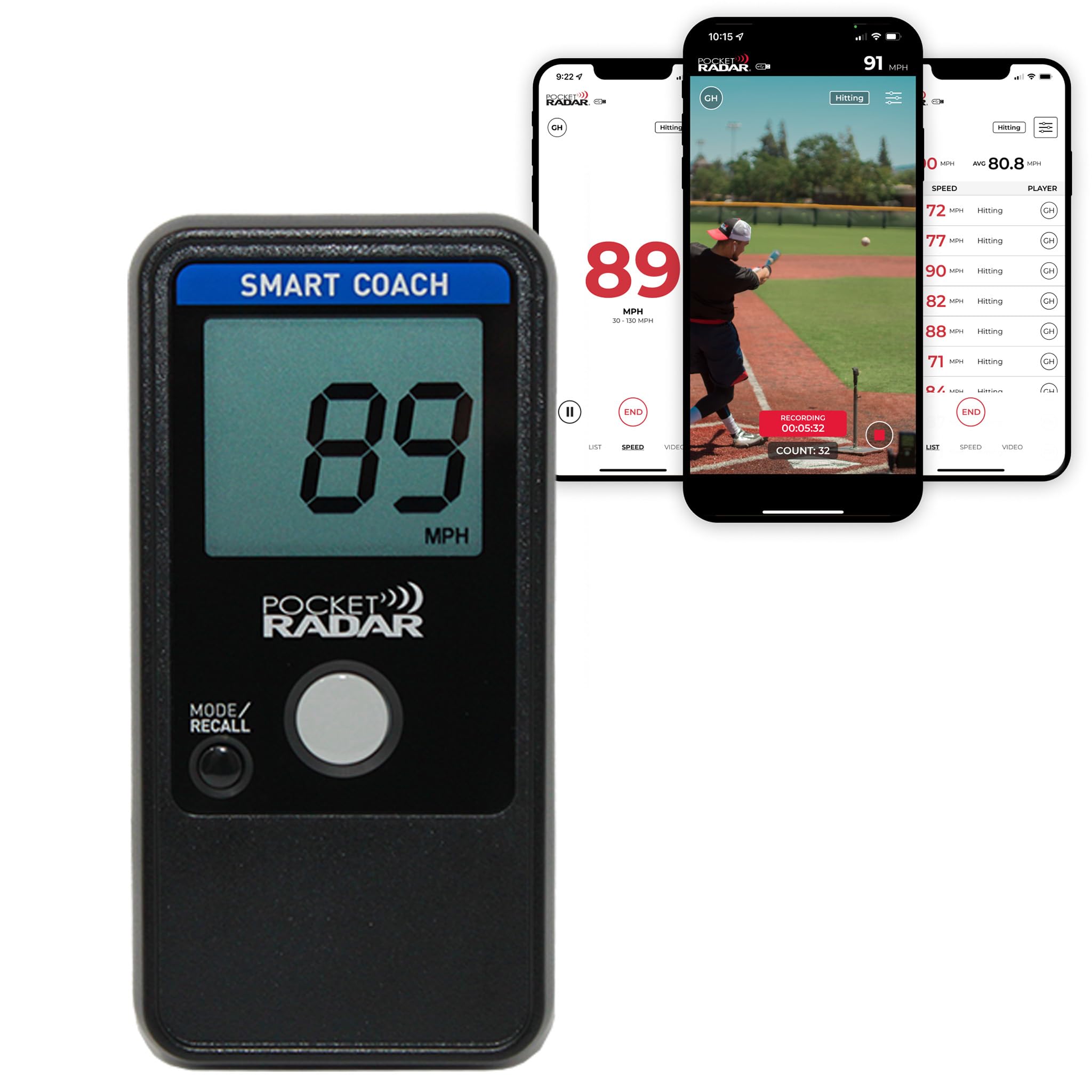
1. Pocket Radar Smart Coach – Best top velocity baseball tool overall
If you care about velocity and you can’t measure it consistently, you’re guessing. That’s why the Pocket Radar Smart Coach is the top overall pick here. It solves the single most important problem in velocity training: getting repeatable, usable feedback without dragging a giant setup to every bullpen or throwing session.
That practicality is a huge deal. A lot of players talk about “working on velocity,” but if the numbers only show up once every few weeks at a camp, showcase, or lesson, the training loop is broken. Pocket Radar helps close that loop. You can throw, measure, log, adjust, and actually see whether the work is moving the needle.
It also has a strong reputation in baseball for a reason. This is not just a novelty speed gun that gives you a fun number once in a while. It is portable enough for regular use and serious enough to matter if a player is trying to track development over time.
The downside is price. It costs more than basic handheld speed guns, and that will matter for some families. But if your goal is long-term velocity development instead of occasional curiosity, it is still the smartest starting point on the board.
If you want a fuller breakdown of speed-measurement tools specifically, our guide to the best radar gun for baseball goes deeper on that side of the category.
- Best for: pitchers, coaches, private training, long-term velocity tracking
- Training focus: pitch speed measurement
- Why it made the list: the clearest all-around answer for serious baseball velocity work
See Current Price →Opens Amazon. Affiliate link.
2. Weighted Baseballs 6 Ball Set – Best top velocity baseball trainer for throwing development
If the keyword means “how do I actually train for more velocity,” weighted baseballs are the most direct answer in the roundup. Overload and underload ball work has become a standard part of modern throwing development for a reason. Used well, it can help players build intent, improve arm speed, and sharpen how they move through a throwing session.
The key phrase there is used well. Weighted balls are not magic, and they are definitely not “just throw harder with a heavier ball.” They make the most sense inside a structured program with enough recovery, good mechanics, and realistic progression. Used recklessly, they can turn into junk reps with extra stress attached.
That warning matters because velocity culture can get dumb fast. Players see a weighted ball set and think the product is doing the work. It isn’t. The product only helps if the training around it makes sense. Still, if you are going to buy one physical tool to support throwing velocity, this is one of the most relevant categories there is.
I like these sets most for players who already have some throwing structure and want a more dedicated training input, not for kids randomly trying to “throw 90” in the backyard because a social clip told them to.
- Best for: structured throwing programs, arm-speed work, pitchers serious about development
- Training focus: overload/underload velocity training
- Why it made the list: one of the most directly relevant tools for real velocity-focused baseball training
Check Price →Opens Amazon. Affiliate link.
3. Jaeger Sports J-Bands – Best top velocity baseball support tool for arm care
Velocity training without arm care is where smart training turns into fake progress. That’s why J-Bands belong in a roundup like this. They are not a sexy pick, but they are one of the most useful support tools around if you care about throwing harder without treating your shoulder like disposable equipment.
The reason they matter is simple. Players chase velocity through intent and volume, but they often skip the boring support work that lets them keep doing it. J-Bands help with prep, shoulder activation, maintenance, and recovery, which is not glamorous, but it is often the difference between sustainable progress and a month off because your arm feels cooked.
I would not call these a standalone velocity solution. They are not. But I would absolutely call them one of the smartest complements to any velocity plan. If you already throw, lift, and track speed, J-Bands help support the part of the system people neglect until something hurts.
This is especially true for high school players and travel-ball players who live in the dangerous middle ground of “training hard enough to get beat up, not always smart enough to prevent it.” For them, this is one of the best purchases in the whole roundup.
- Best for: pitchers, two-way players, arm prep, shoulder maintenance
- Training focus: arm care and support work
- Why it made the list: one of the most important non-radar, non-ball tools in real velocity development
See Reviews →Opens Amazon. Affiliate link.
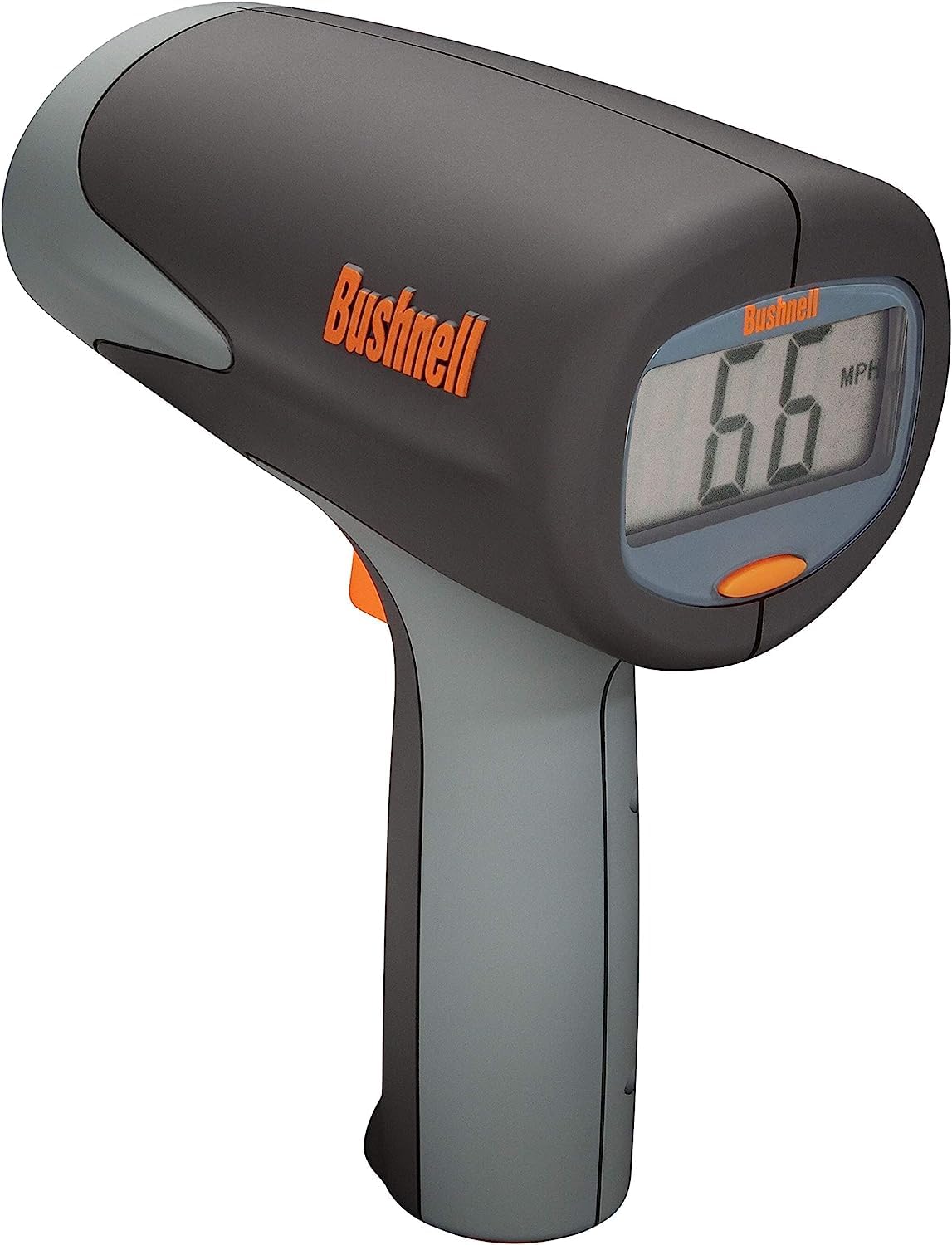
4. Bushnell Velocity Speed Gun – Best top velocity baseball option on a tighter budget
Not every family wants to jump straight to Pocket Radar money. Fair enough. The Bushnell Velocity Speed Gun still has a lane because speed feedback, even in a simpler form, is a lot better than none at all. It is a more old-school handheld tool, and that can be either a limitation or a benefit depending on what you need.
The benefit is straightforward. It is cheaper, simpler, and easier to understand. You point it, get the reading, and move on. For parents, coaches, or players who just want a rough but useful velocity tracking tool without building a full training-data setup, that can be enough.
The limitation is also straightforward. It is not as versatile or as training-system friendly as Pocket Radar. You are getting readings, not a more modern velocity workflow. For some people that is perfectly fine. For others, it becomes a stepping stone they outgrow.
Still, budget matters. And if price is what has kept speed tracking off the table entirely, Bushnell makes more sense than waiting forever for a perfect setup that never arrives.
- Best for: budget-conscious families, occasional velocity checks, basic progress monitoring
- Training focus: simple speed measurement
- Why it made the list: the most practical lower-cost path into actual velocity feedback
Check Price →Opens Amazon. Affiliate link.

5. Velocity Bat Set – Best top velocity baseball pick for hitters
This one is here because not everybody using this keyword means pitching velocity only. Some players and parents mean speed training more broadly, which includes bat speed. If that’s the intent, a velocity bat trainer makes more sense than forcing everything through the mound-velocity lens.
The best use case here is pretty specific. Hitters who want a simple bat-speed training tool, especially younger players who benefit from a clearer feel for tempo and faster hands, can get value from a product like this. It is not as universally important as radar or throwing tools, but it has a legitimate lane.
I would not rank it ahead of pitch-speed tools for pure baseball velocity development. Throwing velocity is usually the more common intent behind this keyword. But if you are building a broader “speed of the game” training setup, swing-speed work deserves a place in the conversation too.
This also pairs naturally with bat selection. If a player is trying to improve how quickly they move the barrel, the wrong game bat can work against that goal. Our guide to the best high school baseball bats is worth reading if that is part of the bigger picture.
- Best for: hitters, bat-speed work, broader speed-focused baseball training
- Training focus: swing speed
- Why it made the list: the best fit for buyers who mean baseball speed training, not just mound velocity
See Current Price →Opens Amazon. Affiliate link.
How this top velocity baseball gear actually compares
Pocket Radar Smart Coach is the best overall tool because it solves the most important problem in velocity training: usable feedback. If you cannot measure progress consistently, everything else gets fuzzier.
Weighted baseballs are the best direct training tool for players focused on throwing harder, but they make the most sense inside a structured plan. They are a serious tool, not a shortcut.
J-Bands are the support pick. They matter because durability and recovery are part of velocity work whether players want to admit it or not.
Bushnell Velocity Speed Gun is the budget entry point for speed readings. It is less sophisticated than Pocket Radar, but still useful if price is the main filter.
Velocity Bat Set is the hitter’s option. It belongs here because “velocity” in baseball doesn’t always stop at the mound, even if throwing speed is the more common intent.
The real dividing line is this: do you need a measurement tool, a training tool, or a support tool? Most players eventually need some mix of all three. The best first buy depends on what is missing most from the current setup.
Common mistakes people make with baseball velocity training gear
Buying tools before fixing the training plan. Gear helps, but it cannot rescue random, inconsistent work.
Using weighted balls without enough structure. They can be useful, but they are not just toys for throwing as hard as possible.
Ignoring arm care because it feels boring. This is one of the fastest ways to turn a good velocity phase into shoulder or elbow trouble.
Tracking speed too rarely. If you only check velocity once in a while, it becomes much harder to know what training is actually doing.
Confusing bat-speed tools with throwing-velocity tools. Both matter, but they solve different development problems.
FAQ
What is the best top velocity baseball tool?
For most players, the best top velocity baseball tool is the Pocket Radar Smart Coach because it gives the most useful and consistent feedback for real throwing development.
Do weighted baseballs really help increase velocity?
They can, especially when used inside a structured throwing program. The key is smart programming and recovery, not just throwing weighted balls as hard as possible.
What is the best way to measure baseball velocity at home?
A portable radar tool like Pocket Radar is the best home-friendly option if you want consistent readings without a bulky setup.
Are velocity training tools safe for youth baseball players?
They can be, but age, maturity, volume, and supervision matter a lot. Younger players usually need better habits and controlled workloads more than aggressive velocity chasing.
What’s better for baseball velocity, radar feedback or weighted balls?
They do different jobs. Radar feedback tells you whether progress is happening. Weighted balls are one possible training input to help create that progress.
Does bat-speed training help baseball performance too?
Yes, for hitters. Bat-speed tools are not the same as pitching-velocity tools, but they can still matter a lot if a player is trying to improve overall offensive speed and power.
The Pocket Radar Smart Coach is the best overall answer for this keyword because it gives baseball velocity work the one thing it needs most: consistent, usable feedback.
If you want a direct training tool, go with a weighted baseball set. If you need a cheaper way to track readings, the Bushnell Velocity Speed Gun is the better budget play. And if you mean speed training for hitters too, the Velocity Bat Set is worth a look.