Most golf books fall into one of three buckets: timeless instruction, mental-game advice, or stories that make you want to sneak out for nine holes before dinner. The best ones do more than fill shelf space. They sharpen your eye, settle your head, or remind you why this maddening sport keeps pulling you back.
After a quick skim of the live search results for best golf books, the dominant pattern is clear: readers want a year-specific list, but they also want classics that have held up for decades. So this list stays tight at five picks and leans hard into usefulness. Every book here earns its place for a different reason, and together they cover mechanics, mindset, strategy, wisdom, and pure golf pleasure.
My short version: start with Ben Hogan for the swing, Bob Rotella for the brain, Harvey Penick for feel, Mark Broadie for smarter scoring, and John Feinstein for the best reminder that pro golf is gloriously strange.
Disclosure: This article contains affiliate links. If you buy through them, I may earn a commission at no extra cost to you.
Quick Picks
| Book | Best for | Why it stands out | Link |
|---|---|---|---|
| Ben Hogan’s Five Lessons | Rebuilding swing fundamentals | The clearest classic on grip, posture, and motion | See Current Price |
| Golf Is Not a Game of Perfect | Mental game and scoring mindset | Still the most practical head-game book for everyday golfers | Check Price |
| Harvey Penick’s Little Red Book | Simple advice that sticks | Short, human lessons you actually remember on the course | See Reviews |
| Every Shot Counts | Course management and scoring | Turns modern stats into decisions regular players can use | Get the Book |
| A Good Walk Spoiled | Golf stories and gift-worthy reading | The funniest, sharpest look inside tour life | Shop This Pick |
The Best Golf Books in 2026
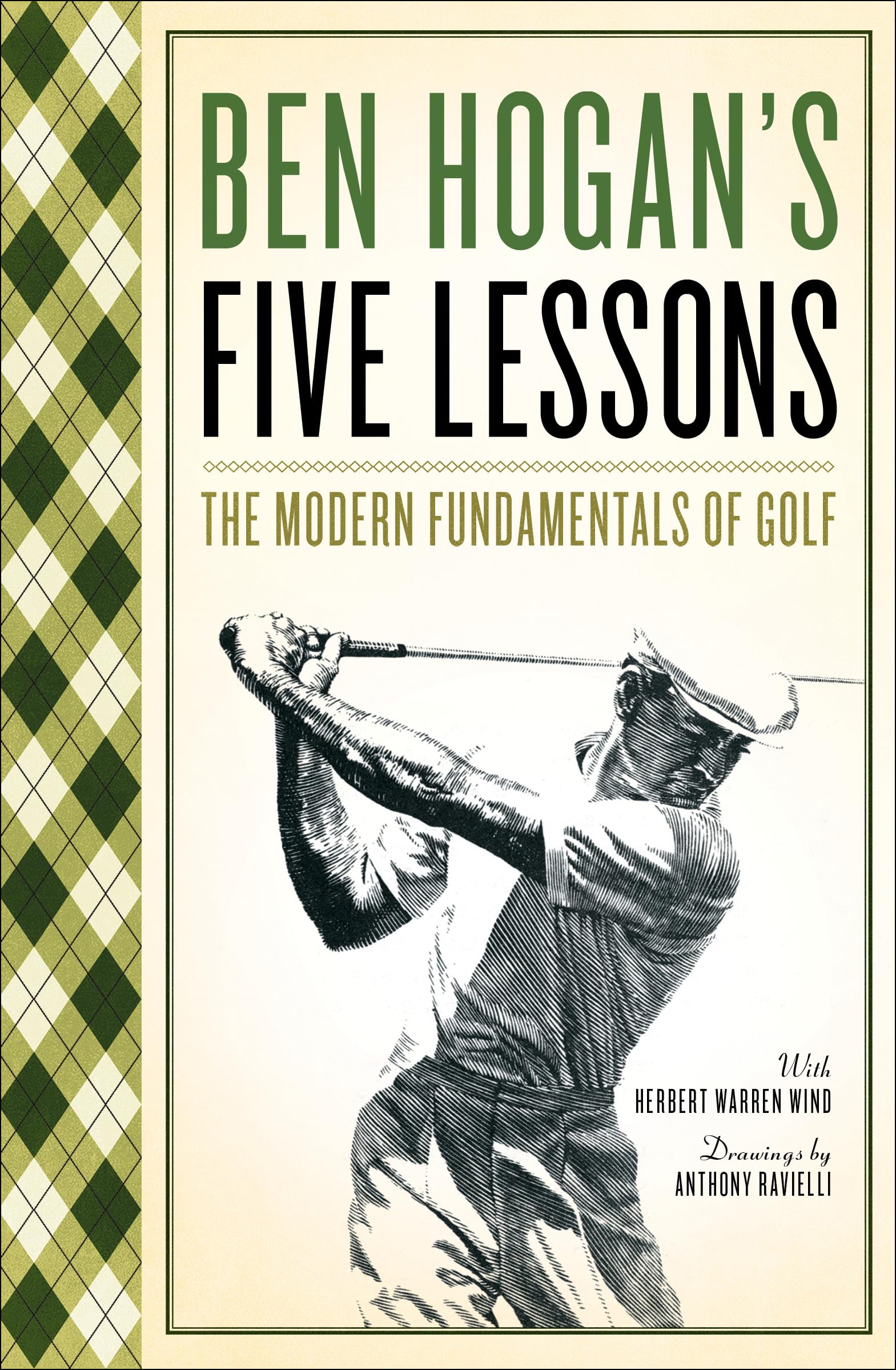
Ben Hogan’s Five Lessons: The Modern Fundamentals of Golf
Plenty of instruction books age badly. This one hasn’t. Ben Hogan’s Five Lessons remains the cleanest explanation of the golf swing ever put on paper, especially for players who need a better grip, more dependable posture, and a clearer picture of what the club should be doing through impact.
What makes it last is the economy. Hogan doesn’t bury the reader in jargon or ten conflicting feels. He narrows the swing into pieces a golfer can study, rehearse, and take to the range. The illustrations still help, and the tone feels demanding in a good way. You can tell the book came from a man who thought every inch of the motion mattered.
One caution, though: this is not breezy bedtime reading. It asks for attention. New golfers who want instant fixes may find it a little stern, while detail-oriented players will love that exactness. For anyone trying to build a motion instead of patching one bad round, this is the first book I’d buy. See Current Price
See today’s price for Ben Hogan’s Five Lessons: The Modern Fundamentals of GolfOpens Amazon. Affiliate link.
Golf Is Not a Game of Perfect by Dr. Bob Rotella
Most amateurs don’t lose strokes because they forgot a textbook takeaway. They lose them because one bad hole hijacks the next three. Golf Is Not a Game of Perfect is still the best book for that problem.
Rotella’s great talent is translation. He takes sports-psych ideas that could sound fluffy and turns them into habits golfers can use on Saturday morning: commit to the shot, accept the result, stop playing defense, trust the work you’ve already done. None of that is revolutionary now, which says more about the book’s influence than its age. A lot of modern golf coaching talks like Rotella whether it admits it or not.
The book isn’t a cure-all. A calm mind won’t save a wildly open clubface. Yet golfers who already own a decent swing usually get more from a better decision-making loop than from one more mechanical thought. That’s where this book earns its reputation. Read a chapter, take one sentence to the course, and scoring tends to get simpler. Check Price
See today’s price for Golf Is Not a Game of Perfect by Dr. Bob RotellaOpens Amazon. Affiliate link.
Harvey Penick’s Little Red Book: Lessons and Teachings from a Lifetime in Golf
Some golf books instruct. This one lingers. Harvey Penick’s Little Red Book is full of short lessons, stories, and observations that sound almost too modest at first. Then one of them pops into your head on the 14th tee and suddenly you’ve made a better swing.
Penick coached major champions, but the book never talks down to ordinary players. Its charm comes from plain language and quiet confidence. He is not trying to impress you with complexity. He is trying to help you strike the ball better, think more clearly, and remember that golf can be hard without becoming joyless.
This is the pick I’d hand to the broadest range of golfers. Juniors can read it. Older players tend to love it. Anyone stuck in over-analysis usually needs it. The tradeoff is that you won’t get a step-by-step system the way you do from Hogan. What you get instead is wisdom with staying power, which is rarer than another drill. See Reviews
See today’s price for Harvey Penick’s Little Red Book: Lessons and Teachings from a Lifetime in GolfOpens Amazon. Affiliate link.
Every Shot Counts by Mark Broadie
Golfers talk constantly about “needing to chip better” or “putt better,” then spend practice time in the wrong place. Every Shot Counts is the book that cuts through those myths. Broadie, the mind behind strokes gained, shows where scores really come from and where amateurs misread their own games.
This is the most modern book on the list, and probably the one most likely to change how you practice. Many players discover that approach play matters more than they thought, recovery heroics matter less, and smart targets beat impulsive aggression. Broadie also explains strategy in a way that makes course management feel measurable rather than mystical.
Numbers can scare readers off, but the writing is better than the subject matter suggests. You do not need to be a stat obsessive to benefit. You only need enough curiosity to ask why your scores stay flat. For competitive golfers, analytical players, and anyone trying to squeeze more out of limited practice time, this is a terrific edge. Get the Book
See today’s price for Every Shot Counts by Mark BroadieOpens Amazon. Affiliate link.
A Good Walk Spoiled: Days and Nights on the PGA Tour by John Feinstein
Lists like this often lean so hard into instruction that they forget golf is also a culture, a circus, and occasionally a very funny mess. A Good Walk Spoiled fixes that. Feinstein’s reporting from inside the PGA Tour remains one of the best sports books ever written, golf or otherwise.
The appeal is not only access. Plenty of insider books have access. Feinstein had an eye for ego, pressure, pettiness, routine, and the kind of tiny moments that make elite sport feel human. His portraits of players, caddies, and tournament life are sharp without becoming mean, and the pace keeps the book moving even for readers who rarely pick up nonfiction.
Will it lower your handicap by itself? No. It will, however, deepen your feel for the game and make Sunday broadcasts more interesting. That matters more than some buyers think. Golf books shouldn’t all be medicine. One of them should simply be a great read, and this is the one I’d choose. Shop This Pick
See today’s price for A Good Walk Spoiled: Days and Nights on the PGA Tour by John FeinsteinOpens Amazon. Affiliate link.
How These Books Stack Up
Buying only one? Match the book to the gap in your game or the mood you’re in.
- For swing mechanics: Ben Hogan’s Five Lessons is the strongest pure instruction choice.
- For confidence and composure: Golf Is Not a Game of Perfect is the safest recommendation.
- For quick wisdom you can reread for years: Harvey Penick’s Little Red Book wins.
- For strategy and lower-scoring decisions: Every Shot Counts gives the biggest modern upgrade.
- For storytelling and gift appeal: A Good Walk Spoiled is the most entertaining pick.
The smart move for most golfers is pairing two books instead of one. Hogan plus Rotella is a strong mix for rebuilding both motion and mindset. Penick plus Broadie works beautifully for players who already know the basics and want better feel and better choices. Feinstein pairs with anything because sometimes the right golf book is the one that makes you want to play again tomorrow.
Common Mistakes People Make When Buying Golf Books
The first mistake is buying an instruction book that doesn’t match your actual problem. A golfer fighting nerves on the first tee may not need another swing manual. A player spraying tee shots everywhere probably shouldn’t start with a mindset book alone. Be honest about the leak in your game.
Another bad move is chasing novelty over quality. Golf publishing turns out plenty of forgettable titles every year, but the best books in this category stay in circulation for a reason. Classics become classics because golfers keep finding value in them long after trends fade.
Some readers also expect one book to cover every part of the sport. That rarely happens. Golf is too broad. Mechanics, mental game, strategy, and history tend to live in separate lanes, so a short shelf of great books usually serves you better than one supposed all-in-one answer.
Last one: people buy a book, read it once, then never revisit it. The strongest golf books improve on the second or third pass because your game changes. Notes that felt abstract in January can feel painfully specific by July.
How I’d Choose Between These Five
For a newer golfer who wants a foundation, I’d start with Hogan and Penick. One gives structure, the other keeps the game from turning into a geometry exam. A mid-handicap player stuck at the same scores for months would probably get more value from Rotella and Broadie. Their combined lesson is simple: think cleaner, choose targets better, stop wasting shots in predictable places.
Gift shopping is a little different. Penick is the safest universal present. Feinstein is the most fun for avid fans who watch tournaments and enjoy golf characters. Broadie is the sharpest pick for the gear-and-data friend who already tracks everything anyway.
There is also a shelf-life angle. Hogan, Rotella, and Penick are reread books. Broadie is the one you underline and argue with. Feinstein is the one you lend out, then mildly resent when it doesn’t come back.
FAQ
What is the best golf book for beginners?
Harvey Penick’s Little Red Book is the easiest entry point because the advice is simple, warm, and memorable. Beginners who want deeper mechanical detail can add Ben Hogan’s Five Lessons after that.
Which golf book actually helps lower your score?
Every Shot Counts has the strongest case because it changes how golfers practice and manage the course. Rotella’s book can save strokes too, especially for players who blow up after mistakes.
Is Ben Hogan’s Five Lessons still worth reading today?
Yes. Some terminology feels old-school, but the instruction on grip, posture, and coordinated motion still holds up. That staying power is exactly why the book keeps appearing on best golf books lists.
What is the best golf book for the mental game?
Rotella’s book remains the standard recommendation. The advice is practical, readable, and far less abstract than many sports psychology books.
Are golf books better than YouTube lessons?
They do different jobs. Video is great for seeing motion, while books are better for building a coherent way to think. The strongest golfers usually use both instead of treating them as rivals.
What golf book makes the best gift?
A Good Walk Spoiled is a great gift for readers who love tournament golf, while Harvey Penick’s Little Red Book is the safest all-around choice for almost any golfer.
One final thought: the right golf book is rarely the one with the flashiest cover or the newest publishing date. Look for the title that sticks in your head on the range, shows up on the course, and earns a second read six months later. These five do exactly that.