Losing a ball to the edge of a pond is annoying. Losing three in one round gets expensive fast. The best golf ball retriever helps you save balls without risking a club, straining your back, or turning a quick recovery into a circus act. The right one also tucks neatly into your bag and stays useful round after round.
After skimming the current search results, one thing is clear: golfers mostly want practical help here, not gadget hype. Reach matters. Head design matters more than most people think. Build quality decides whether your retriever becomes a sneaky money-saver or a rattly telescoping regret.
Disclosure: This article contains affiliate links. If you buy through them, I may earn a commission at no extra cost to you.
My short version: the Callaway Golf Ball Retriever is the safest pick for most golfers, the IGOTCHA JAWZ is the one to buy for long water carries and deeper hazard edges, and the Search and Rescue Retriever is still a smart buy for simple, compact recovery.
Quick Picks
| Pick | Best for | Why it stands out | Link |
|---|---|---|---|
| Callaway Golf Ball Retriever | Best overall | Reliable ring-style pickup, strong build, easy to stash in the bag | See Current Price |
| IGOTCHA JAWZ 18′ | Deep water and extra reach | Long extension and secure grab for balls just beyond normal retriever range | Check Price |
| Search and Rescue Retriever | Best budget pick | Compact, straightforward, and tougher than its price suggests | See Reviews |
| Prowithlin Golf Ball Retriever | Light carry | Very light in hand with decent corrosion resistance | View Price |
| Izzo The Claw | Compact storage | Simple, tidy option for golfers who want a retriever that disappears in the bag | See Details |
The 5 best golf ball retrievers

Best overall
1. Callaway Golf Ball Retriever
The Callaway is the easy recommendation because it gets the basics right without feeling cheap or fiddly. The shaft has enough rigidity to stay useful at extension, the grip feels secure, and the pickup head works in the murky real-world situations that matter most: shallow pond edges, muddy banks, light rough, and the awkward area where reeds start getting involved.
What I like most is the head design. Ring-style retrievers tend to be less frustrating than basic scoop heads because they hold the ball more confidently once you’ve lined it up. That means fewer annoying near-misses where the ball slips out right before you lift it free.
The included headcover is also more useful than it sounds. It keeps the retriever from snagging other clubs and makes the whole thing store more neatly. Not glamorous, but very welcome.
Best fit: the golfer who wants one retriever that covers almost every normal course situation.
Watch-out: at full extension, it still gets a little wobbly, like nearly every telescoping retriever in this category.
See Current PriceOpens Amazon. Affiliate link.
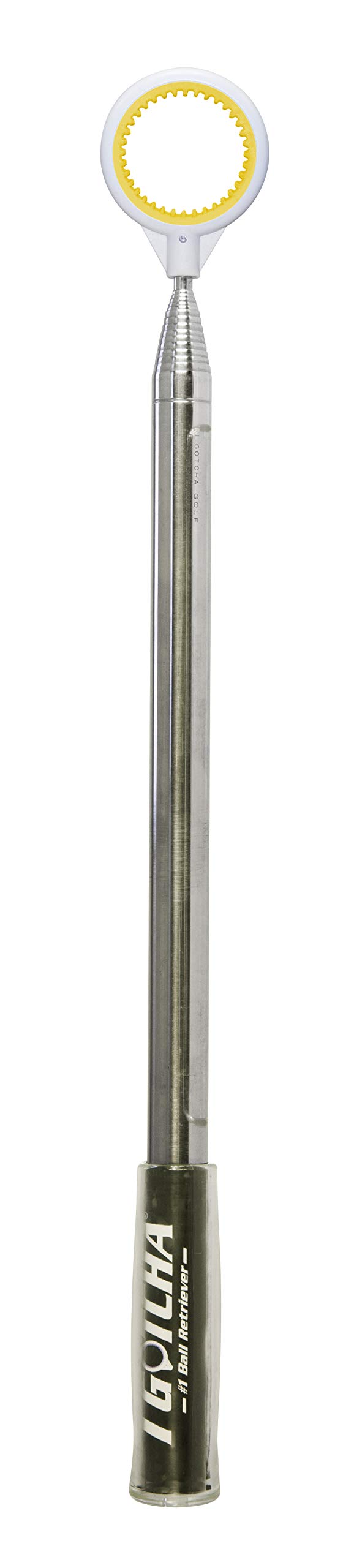
2. IGOTCHA JAWZ 18′
Some golfers barely need a retriever. Others seem magnetically drawn to the far side of hazard lines. The IGOTCHA JAWZ is for the second group.
The big appeal here is reach. An 18-foot retriever gives you a real shot at saving balls that shorter models force you to abandon. That matters on courses with bulkheaded ponds, steep banks, or those nasty little retaining-wall edges where the ball is visible but just out of range.
The JAWZ head is designed to grip rather than simply cup the ball, which helps when the water is moving a bit or the ball is resting against algae, mud, or loose stones. Longer retrievers always trade some control for extra distance, and that tradeoff is real here. Still, golfers who routinely play courses with water everywhere will gladly take that compromise.
Where it earns its keep: long carries, deeper hazard lips, and recovery jobs that would mock a 6-foot model.
Small downside: max-length use takes a steadier hand, especially in wind.
Check PriceOpens Amazon. Affiliate link.

Best budget pick
3. Search and Rescue Retriever
This one is short, plain, and more useful than many golfers expect. The Search and Rescue Retriever won’t reach halfway across a lake, but that’s not really the point. Most lost balls that are actually recoverable sit near the edge, under a bush, beside rocks, or in shallow water where a compact retriever does the job just fine.
That shorter length is a genuine advantage for control. You can guide it more precisely, store it more easily, and pull it out without feeling like you’re assembling fishing gear on the tee box. For plenty of casual golfers, that’s the better experience.
Build quality also tends to be better than the bargain-bin price suggests. No, it doesn’t feel fancy. It does feel like something you can keep in the bag for a long time and use without babying it.
Sweet spot: golfers who mostly need help near hazard edges and don’t want to spend much.
Limitation: the shorter reach makes it a poor match for deeper ponds or steep embankments.
See ReviewsOpens Amazon. Affiliate link.
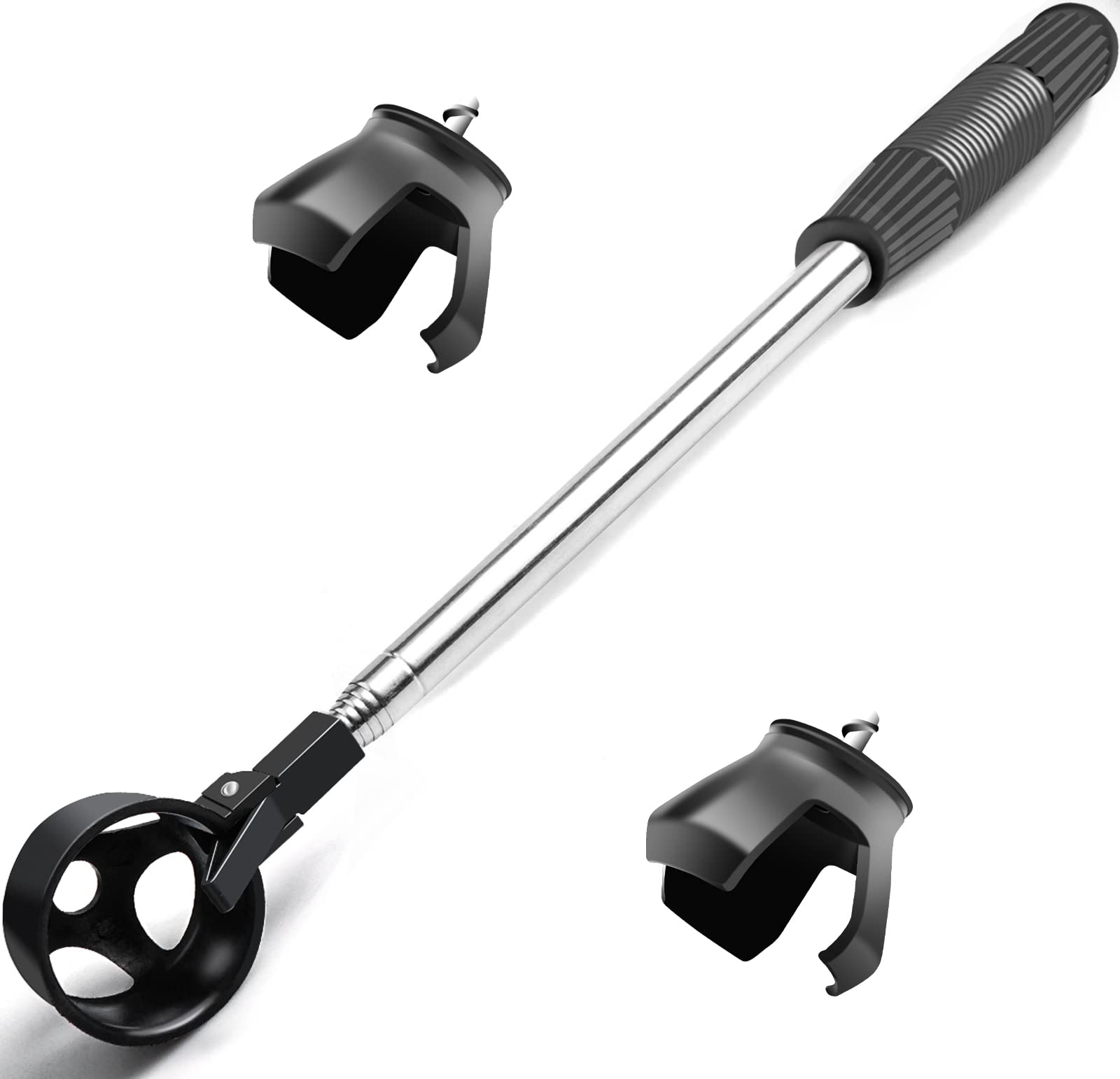
4. Prowithlin Golf Ball Retriever
The Prowithlin makes sense for golfers who care about weight and simple portability. Heavier retrievers can feel awkward in the bag and a little tiring during repeated use. This one stays light enough that you barely notice it’s there.
That lighter build does create a different feel than sturdier premium options. It’s less confidence-inspiring during tough retrievals, yet plenty of golfers will accept that trade because the price is friendly and the overall package is easy to live with. Stainless construction is another plus since cheap retrievers tend to age badly once water, mud, and bag chatter pile up.
I wouldn’t make this my first choice for constant abuse on courses full of rocks and retaining walls. For ordinary pond-edge saves and casual play, though, it’s a respectable value pick.
Why golfers buy it: low weight, solid value, and no unnecessary complexity.
Trade to accept: less robust feel than the top two picks.
View PriceOpens Amazon. Affiliate link.
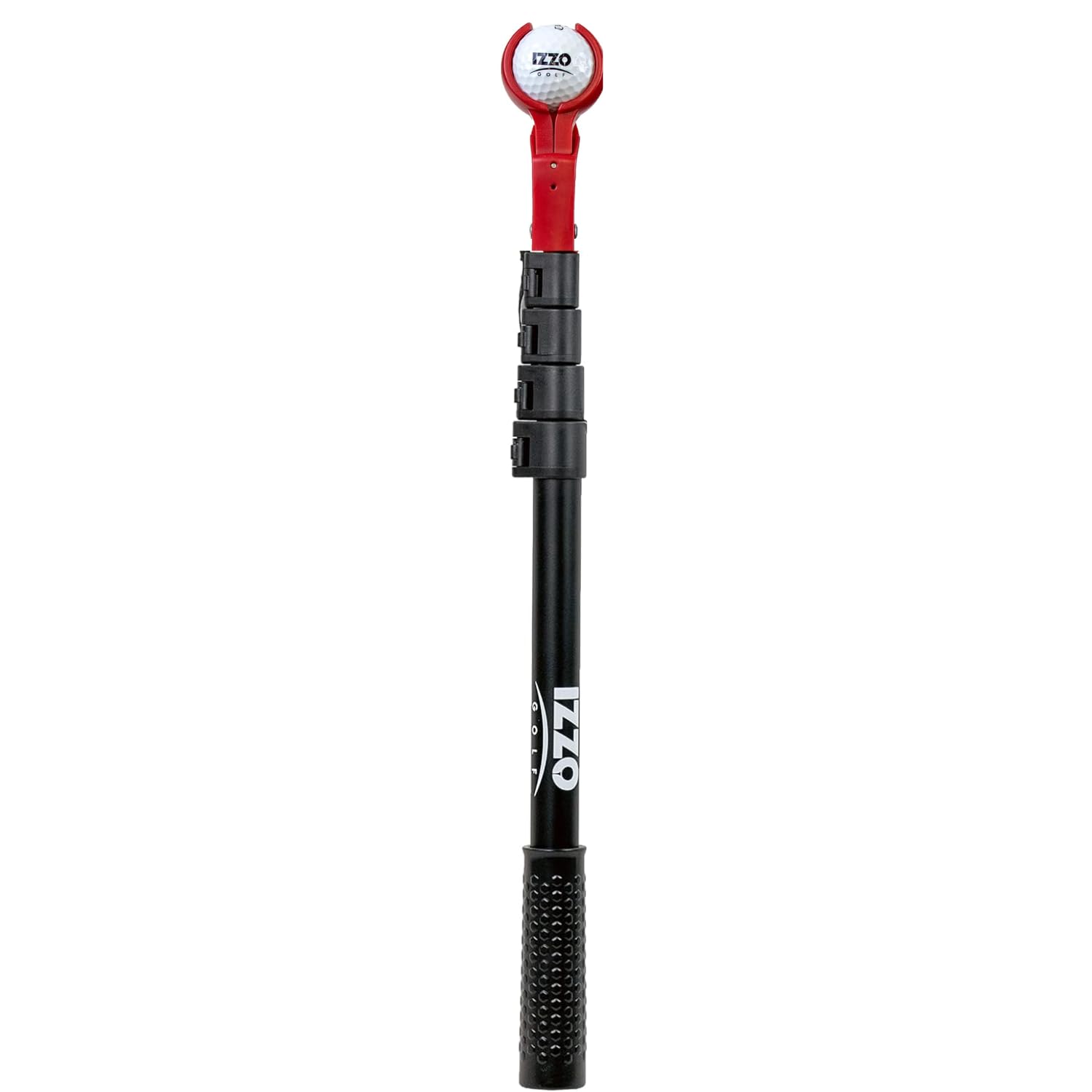
5. Izzo The Claw
Some retrievers are all about reach. The Izzo The Claw is about convenience. It’s a nice fit for golfers who hate clutter and want a model that stores cleanly, deploys quickly, and handles the common recovery jobs without drama.
The compact design is the headline, but the bigger win is that it feels tidy in use. You’re not fighting a bulky head or a cumbersome shaft. Pull it out, extend it, grab the ball, move on. That rhythm matters more than people think, especially during casual rounds where nobody wants a three-minute pond excavation scene.
Shorter reach limits how ambitious you can get, so this isn’t the one for serious water-ball scavenging. For players who just want a discreet emergency tool, it’s a sensible addition.
Best use: quick saves near the bank and easy storage in a crowded bag.
Main compromise: limited range compared with longer telescoping models.
See DetailsOpens Amazon. Affiliate link.
What matters most when choosing the best golf ball retriever
Length is the first thing most golfers check, but it shouldn’t be the only thing. A very long retriever that flexes too much can be harder to use than a shorter model with better control. Around 12 to 18 feet is the useful range for true water-hazard work, while 6 to 9 feet is often enough for rough, shallow banks, and simple edge recoveries.
Head design is the next piece. Ring or grab-style heads are usually more dependable than flimsy scoop designs because they keep the ball from slipping away mid-lift. That difference gets obvious in muddy water or when the ball is resting against rocks.
Material matters too. Aluminum alloy and stainless steel are the safer bets. Ultra-cheap options can look fine online and feel terrible after a few rounds, especially once the locking sections loosen up.
Storage is the underrated factor. A retriever that collapses neatly and doesn’t snag everything in your bag is far more likely to stay with you every round. The best retriever is the one you actually keep handy when a Pro V1 is staring at you from two feet beyond the bank.
How these picks compare
The Callaway is the best all-arounder because it balances reach, durability, and ease of use better than the rest. It’s the one I’d hand to the widest range of golfers.
The IGOTCHA JAWZ is the specialist. Buy it for maximum reach and tougher hazard recoveries. Golfers on water-heavy courses will get the most value here.
The Search and Rescue is the practical budget choice. It doesn’t pretend to be everything, but it’s controlled, compact, and honest about what it does well.
The Prowithlin leans toward lightweight convenience and value. That makes it appealing for casual players who don’t want a heavier premium model riding along.
The Izzo The Claw is the tidy minimalists’ option. Less range, less fuss, easy to stash.
Common mistakes golfers make when buying a retriever
Buying purely on maximum reach. Extra length sounds great until the shaft flexes so much that the head becomes hard to control. Longer isn’t automatically better.
Ignoring the pickup head. A weak or awkward head design turns every recovery into a coin flip. This is one of the biggest differences between decent retrievers and frustrating ones.
Choosing the cheapest thing available. Saving ten bucks on the tool that’s supposed to rescue expensive golf balls is usually false economy.
Forgetting how the course plays. A short compact retriever may be perfect on one home course and nearly useless on another with steep-sided hazards.
Not thinking about storage. Bulky gear gets left at home. Compact, bag-friendly designs get used.
Which one should you buy?
For most golfers, start with the Callaway Golf Ball Retriever. It has the fewest weaknesses and the broadest appeal.
Golfers who lose balls to larger ponds or long carry misses should step up to the IGOTCHA JAWZ 18′. That added reach changes what’s realistically recoverable.
Players who just want a no-drama, low-cost option should feel good about the Search and Rescue Retriever. It’s simple, compact, and useful far more often than its size suggests.
FAQ
Are golf ball retrievers allowed under the Rules of Golf?
Yes. A golf ball retriever is a legal piece of equipment for normal play. Local rules or event-specific equipment restrictions are uncommon here, but tournament players should always glance at the competition sheet.
How long should a golf ball retriever be?
That depends on the course you play most. Around 6 to 9 feet is enough for shallow water, bushes, and bank-side saves. Regular play around larger hazards usually calls for 12 to 18 feet.
What head design works best on a golf ball retriever?
Ring-style and grab-style heads are generally more secure than basic scoops. They hold the ball more reliably during the lift, especially in muddy or uneven conditions.
Do golf ball retrievers rust or wear out quickly?
Cheap ones can. Stainless steel and aluminum models usually hold up much better, particularly when they’re dried off now and then instead of being shoved wet into the bag for weeks.
Can a golf ball retriever damage the ball?
Normally, no. A decent retriever won’t hurt the cover during ordinary use. Scrapes are more likely to come from rocks, cart paths, or the hazard itself than from the retriever head.
Is a golf ball retriever worth carrying every round?
For most golfers, yes. One or two saved premium balls can justify the space pretty quickly, and it also keeps you from trying dumb rescue missions with a club you actually care about.