Airline travel is the harshest environment your golf clubs will ever see. It’s not just the flight—it’s the entire baggage process: check-in drop, conveyor belts, baggage carts, stacking in the hold, unloading in the rain, and the occasional “this bag definitely fell off something” impact. The right golf travel bag for airlines won’t make damage impossible, but it can drastically reduce the risk of the most common failures: broken driver shafts, cracked heads, bent putters, and torn zippers.
The tricky part is that the “best” travel bag depends on how you travel. If you fly once a year to a golf resort, you probably don’t need the same gear as someone taking 8–12 flights per season with premium aftermarket shafts. This guide covers the best golf travel bags for airlines in 5 picks, plus a comparison table, what to look for, what mistakes destroy clubs, and a structured Q&A for fast answers.
Quick picks: Best golf travel bags for airlines (comparison table)
| Pick | Type | Best for | Protection level | Storage at home/hotel | Why it’s great | Amazon link |
|---|---|---|---|---|---|---|
| Club Glove Last Bag Collegiate | Premium soft cover | Frequent flyers who want a proven soft cover | High (for a soft case) | Easy | Durability + smooth travel handling | Amazon PDP |
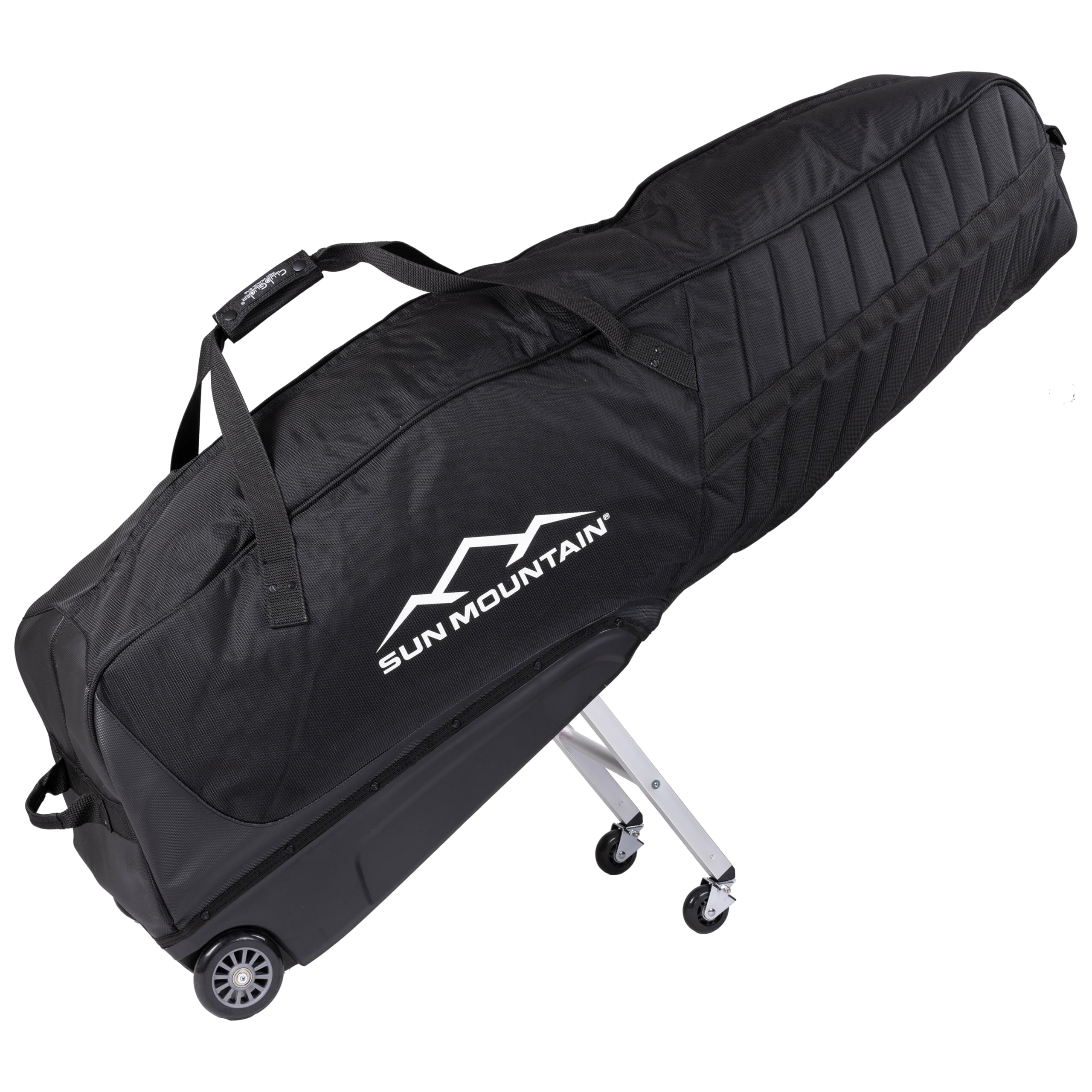
| Sun Mountain ClubGlider Meridian | Soft cover with leg + wheel system | Best airport maneuverability | High | Easy | Easiest to roll/steer when loaded | Amazon PDP |
| SKB Deluxe Standard ATA Golf Travel Case (2SKB-4814W) | Hard case | Maximum protection / premium gear | Very high | Hard (bulky) | Rigid crush resistance | Amazon PDP |
| Bag Boy T-10 Hard Top Travel Cover | Hybrid (hard top + soft body) | More protection than soft, less hassle than hard | High to very high | Moderate | Hard top protects the clubhead zone | Amazon PDP |
| CaddyDaddy Constrictor 2 | Value soft cover | Occasional flyers / best value | Medium to high | Easy | Protection-for-price sweet spot | Amazon PDP |
Best golf travel bag for airlines (5 picks)
1) Club Glove Last Bag Collegiate — Best overall soft golf travel bag for airlines
If you want a soft travel cover that’s built like real luggage (not a thin fabric sleeve with wheels), Club Glove is a benchmark. The Last Bag Collegiate is especially popular because it offers premium materials and travel-friendly handling without forcing you into the bulk and storage hassle of a hard case.
What makes it airline-worthy:
- Durable construction: In airline travel, zippers, seams, and wheel housings are common failure points. Premium soft covers usually win here because they’re built for repeated abuse.
- Better top-end protection than typical soft covers: The top of your bag (driver/woods area) is where damage is most likely. A premium soft cover with good padding helps reduce impact damage.
- Easy handling: The “best” travel bag is also the one you don’t dread dragging across a terminal or parking lot.
Who it’s for: Golfers who fly multiple times per year, want something durable and proven, and prefer the easier storage of a soft case.
What to do to maximize protection: Treat any soft cover as a system: use a support rod/stiff arm, secure the golf bag so it can’t shift, and pad the clubhead area. (More on that in the mistakes + packing sections.)
View on AmazonOpens Amazon. Affiliate link.
2) Sun Mountain ClubGlider Meridian — Best golf travel bag for airports (maneuverability)
If you’ve ever tried to sprint a connection while dragging a 35–50 lb golf travel bag that tips over every 30 seconds, you understand why maneuverability matters. The ClubGlider Meridian is famous because it makes hauling clubs feel unusually easy. Its leg/wheel system supports the load so you’re not constantly fighting friction, tipping, or awkward pulling angles.
Why it’s so good for airline travel:
- Effortless rolling when loaded: This is the defining feature—especially noticeable in long terminals.
- Better stability: Less tipping reduces hard impacts (and also reduces your stress).
- Good protection where it counts: Dense padding near the top helps protect the most vulnerable clubs.
Who it’s for: Frequent flyers, golfers who travel through large airports, or anyone who values convenience as much as protection.
Trade-off: It’s a premium bag. If your top priority is maximum crush resistance, a hard case still beats any soft cover. But in the real world, the ClubGlider often wins on “total travel happiness.”
View on AmazonOpens Amazon. Affiliate link.
3) SKB Deluxe Standard ATA Golf Travel Case (2SKB-4814W) — Best hard case for airlines (maximum protection)
If your mindset is “I don’t care about bulk; I care about my clubs arriving intact,” get a hard case. Hard cases provide the strongest protection against crushing, stacking, and sharp impacts—exactly the scenarios that break expensive driver shafts and crack carbon crowns.
Why hard cases are the safest option:
- Crush resistance: A rigid shell is harder to deform under load. That matters when heavy bags get stacked.
- Drop protection: A hard case can distribute impact forces better than fabric alone.
- Less dependence on perfect packing: You should still pack smart, but a hard case gives you a bigger margin of error.
Who it’s for: Golfers with premium gear (aftermarket shafts, expensive heads), frequent flyers with multiple connections, and anyone who has already suffered airline damage and doesn’t want a repeat.
Trade-offs to be honest about:
- Storage: Hard cases are bulky at home and in hotel rooms.
- Transport: They can be awkward in smaller rental cars.
- Weight: A hard case plus a loaded bag can get heavy quickly—watch airline weight limits to avoid surprise fees.
View on AmazonOpens Amazon. Affiliate link.
4) Bag Boy T-10 Hard Top Travel Cover — Best hybrid golf travel bag for airlines (hard top + soft body)
Hybrid hard-top travel covers are popular because they focus protection where it matters most: the clubhead zone. Many club breaks happen near the top of the bag when the cover gets dropped or when something heavy hits the upper area. A hard top adds a layer of protection there without forcing you into a full hard-shell lifestyle.
Why it’s a smart compromise for many travelers:
- Hard top = better defense for driver/woods: That’s where you’re most likely to lose a shaft or crack a head.
- Soft body = easier storage: Still far easier to store than a full hard case.
- Travel usability: Wheels and access design make packing/unpacking less annoying.
Who it’s for: Golfers who want more protection than standard soft covers but aren’t ready to commit to full hard case bulk/weight.
Trade-off: It’s not as crush-proof as a full hard case, so you still need smart packing and internal stability.
View on AmazonOpens Amazon. Affiliate link.
5) CaddyDaddy Constrictor 2 — Best value golf travel bag for airlines
If you fly once or twice a year for a golf trip, you probably don’t need the most expensive travel cover on the market. You do, however, want something better than a thin generic cover that fails at the zipper or provides no real protection. The Constrictor 2 is a popular value pick because it typically offers strong materials for the price and practical features like pockets and straps.
Why it’s the best value category pick:
- Protection-for-price: A meaningful step up from bargain-bin covers.
- Practical storage: Pockets can help consolidate shoes/accessories (but don’t overstuff them).
- Travel-friendly rolling: Makes airport movement manageable.
Who it’s for: Occasional travelers, budget-conscious golfers, and anyone who wants a decent airline-ready cover without premium pricing.
Trade-off: Premium covers often have better long-term durability and smoother “fit and finish” (wheel feel, zipper feel) if you fly constantly.
View on AmazonOpens Amazon. Affiliate link.
What to look for in a golf travel bag for airlines (buyer’s guide)
1) Soft vs hard vs hybrid: choose your protection philosophy
Start by deciding which trade-offs you’re willing to live with:
- Soft cover: easier to store; usually lighter; generally cheaper. Protection depends more on packing technique and using a support rod.
- Hard case: best protection; bulky; heavier; awkward in small cars/hotels.
- Hybrid hard-top: extra protection in the clubhead zone while staying more manageable than a full hard case.
2) Wheel quality and stability (a hidden “protection” feature)
Wheels aren’t just convenience. A bag that tips over is a bag that gets slammed into the ground. Look for sturdy wheels, a stable base, and an overall design that tracks straight when loaded.
3) Internal straps/compression to stop movement
One of the most common causes of damage is movement inside the travel cover. When your golf bag shifts, impacts translate into your clubs. Good internal straps and compression help keep the bag centered and reduce rattling.
4) Top-end padding (or hard top)
If you only remember one thing: protect the top. That’s where driver/wood heads live and where airline impacts often concentrate.
5) Zippers, seams, and fabric strength
Airline travel destroys weak zippers. If you fly often, prioritize heavy-duty zippers and thick fabric (denier ratings are sometimes listed). A travel cover failing mid-trip is a nightmare.
Comparison block: Soft cover vs hard case vs hybrid hard-top (which should you choose?)
Soft travel covers
- Pros: easy to store, often lighter, fits better in cars/hotels, usually cheaper
- Cons: less crush protection; depends on packing + support rod
- Best picks: Club Glove Last Bag Collegiate, Sun Mountain ClubGlider Meridian
Hard cases
- Pros: maximum protection; best against drops/crushing; biggest peace of mind
- Cons: bulky/heavy; harder to store; awkward in small vehicles
- Best pick: SKB Deluxe ATA case
Hybrid hard-top covers
- Pros: extra protection around clubheads; easier to store than hard cases
- Cons: not as crush-proof as full hard shells; still needs smart packing
- Best pick: Bag Boy T-10
Simple recommendation: If you fly often and your gear is expensive, choose a hard case or a premium soft cover plus a stiff arm and careful packing. If you fly occasionally, a quality value soft cover is usually enough.
Common mistakes when flying with golf clubs (and how to avoid them)
- Skipping a stiff arm/support rod in a soft cover. This is one of the most effective, low-cost protection upgrades because it helps prevent the cover from collapsing onto clubheads.
- Leaving adjustable driver/wood heads attached (when removable). If your driver head comes off, remove it and wrap it. The hosel/shaft junction is a common break point.
- Letting clubs rattle. Use towels, jackets, or headcovers to fill gaps so nothing bangs around. Movement turns normal handling into sharp impacts.
- Packing heavy items near the top. Heavy shoes or accessories placed high increase leverage and impact force on the clubhead area. Keep heavy items low.
- Overstuffing external pockets. Bulging pockets snag on conveyors and stress zippers and seams.
- Not weighing your bag. Golf travel bags get heavy fast. Weigh before leaving to avoid surprise airline fees and frantic repacking at the counter.
- Assuming “fragile” stickers change anything. Pack as if the bag will be dropped. Sometimes it will be.
Structured Q&A: Best golf travel bag for airlines
What is the best golf travel bag for airlines?
For most golfers who want a premium soft cover, the Club Glove Last Bag Collegiate is a top choice for durability and travel handling. If you want maximum protection, a hard case like the SKB Deluxe ATA is the safest option.
Are hard cases better than soft golf travel bags for flying?
Generally yes for protection. Hard cases offer better crush resistance and drop protection. Soft covers can still be very safe if they’re high quality and you pack correctly (support rod, padding, removing adjustable heads).
Is a hard-top hybrid golf travel bag worth it?
Yes if you want extra protection around the clubhead zone without full hard-case bulk. A hybrid like the Bag Boy T-10 is a strong middle ground.
What’s the easiest golf travel bag to roll through an airport?
The Sun Mountain ClubGlider Meridian is widely loved for maneuverability thanks to its leg/wheel system, which supports the bag and reduces drag and tipping.
How do I pack golf clubs for a flight to reduce break risk?
Use a stiff arm/support rod (especially in soft covers), remove adjustable driver/wood heads when possible, pad the clubhead area with towels/clothes, secure everything with internal straps so nothing moves, and keep heavy items low.
Do airlines treat golf bags as oversized?
It depends on the airline and your ticket/status. Many airlines have specific sports equipment rules. The safest approach is to check your airline’s current policy and weigh your bag at home.
Internal links (placeholders)
- How to Pack Golf Clubs for a Flight (Step-by-Step)
- Best Golf Travel Accessories (Stiff Arms, Locks, Tags & More)
- Best Golf Shoe Bags (Keep Your Luggage Clean)
Bottom line
If you want the best all-around soft golf travel bag for airlines, choose the Club Glove Last Bag Collegiate. If you care most about airport maneuverability, the Sun Mountain ClubGlider Meridian is outstanding. For maximum protection, the SKB Deluxe ATA hard case is the safest bet. And if you want a smart middle ground, the Bag Boy T-10 adds hard-top protection where airline damage most often occurs.
Whichever route you choose, the real secret is packing: eliminate movement, protect the clubhead zone, and assume your bag will be dropped at least once. Do that, and your clubs are far more likely to arrive ready for the first tee.