The best baseball rebounder gives you something that is hard to create in normal practice: repeatable reps on demand. You do not need a partner, you do not need a full team workout, and you do not need a bucket of perfect fungoes just to work on hands, footwork, and reaction speed.
That is why rebounders are so useful for baseball players. A good one can help infielders sharpen glove work, let pitchers practice fielding comebackers, give catchers and utility players extra reaction reps, and help younger players get more comfortable reading hops. The bad ones, though, are a pain. They wobble, tip, send dead rebounds, or take forever to adjust between drill types.
After a quick live skim of current results for this topic, the title pattern stayed simple: “best baseball rebounder” or “best baseball rebounders,” usually with current-year framing and a focus on solo training, fielding, and durability. That is the right framing, because this category is less about flashy features and more about one question: which rebounder gives you the most useful reps for the kind of player you actually are?
This guide keeps it to five picks because the category really does break into five meaningful lanes: best overall, best premium trainer, best for youth players, best for serious solo reps, and best budget-friendly choice. If you just want the short answer, Franklin is the easiest all-around recommendation. If you want the strongest training-first option, Rukket and SKLZ deserve a close look.
Quick picks: the best baseball rebounders
| Rebounder | Best for | Size/style | What stands out | Link |
|---|---|---|---|---|
| Franklin Sports Baseball Rebounder Net | Best overall | Multi-angle rebounder | Best blend of value, availability, and useful fielding reps | See Current Price |
| Rukket Baseball/Softball Rebounder | Best premium pick | Heavy-duty angled screen | Stronger frame and more serious training feel | Check Price |
| SKLZ Fielding Trainer Rebounder | Best for infield drills | Compact quick-hop trainer | Great for reaction work and shorter fielding sessions | See Reviews |
| GoSports Baseball Rebounder | Best budget value | Adjustable rebound net | Good size-to-price balance for backyard practice | Check Price |
| PowerNet Baseball Rebound Net | Best for serious solo practice | Portable training net | Strong portability and solid rep quality for regular use | See Current Price |
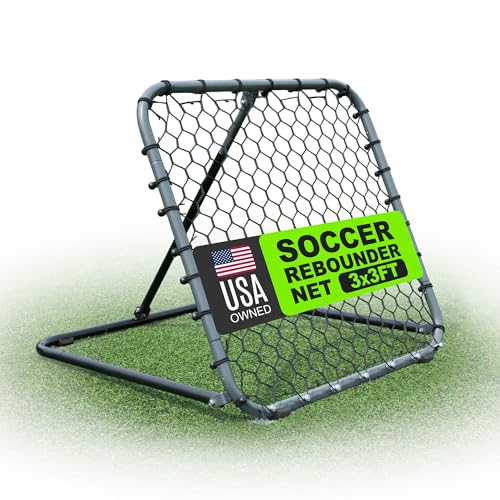
1. Franklin Sports Baseball Rebounder Net – Best baseball rebounder overall
If you want one rebounder that fits the biggest range of players and practice setups, Franklin is the easiest recommendation. It is the most “normal person useful” option in the category, which matters more than people think.
A lot of baseball gear looks impressive but only makes sense for one narrow use case. Franklin’s rebounder works because it is versatile. You can use it for basic infield reps, reaction training, youth fielding work, and general glove practice without needing a huge dedicated setup. That flexibility is exactly what makes it the best overall pick.
The frame is usually sturdy enough for regular backyard use without becoming overly heavy or annoying to move. The net tension creates rebounds that are lively enough to be useful but not so hot that younger players lose confidence immediately. That makes it a smart middle-ground option for families, travel players, and casual solo practice sessions.
Another reason Franklin wins here: it is easy to understand. Some rebounders try to do too much, with complicated angle adjustments or bulky frames that feel like they belong at a team facility. Franklin lands in a better place. It is simple enough for home use and still effective enough to matter.
That does not mean it is perfect. If you train hard year-round and want the most durable, premium-feeling frame possible, Rukket is stronger. If you only care about compact reaction work, SKLZ may be a better fit. But if your question is just “what is the best baseball rebounder for most players?” this is the cleanest answer.
- Best for: most players, backyard training, general fielding reps
- Style: adjustable rebound net
- Why it made the list: most balanced mix of usability, durability, and price
See Current Price →
2. Rukket Baseball/Softball Rebounder – Best premium baseball rebounder
Rukket is the pick for players who want a rebounder that feels more like real training equipment than a backyard toy. That is the difference. It is not just about being more expensive. It is about getting a stronger frame, more reliable rebound quality, and a design that holds up better under repeated harder throws.
This matters a lot for older youth players, high school athletes, and serious travel-ball families. Once the throws get harder and the reps get more frequent, cheaper rebounders start to show their limitations fast. Frames flex more, nets loosen up, and the rebound quality gets inconsistent. Rukket is built to avoid more of that.
It is also one of the better picks if multiple players are using the same trainer. Premium rebounders make more sense when the equipment gets used several times a week instead of just once in a while. If the whole point is saving time by getting solo reps at home, the last thing you want is gear that starts feeling loose halfway through the season.
The main tradeoff is obvious: cost. If you are buying for a younger player who may outgrow the setup or lose interest, a premium rebounder can be overkill. But if you know the equipment will get used, paying for better construction is usually worth it.
This is also one of the strongest choices for players who want sharper, more aggressive hops. A serious rebounder should challenge you a little. Rukket does that without turning into chaos.
- Best for: serious players, older youth, regular hard-use practice
- Style: premium heavy-duty rebound net
- Why it made the list: stronger build and better long-term training value
Check Price →Opens Amazon. Affiliate link.
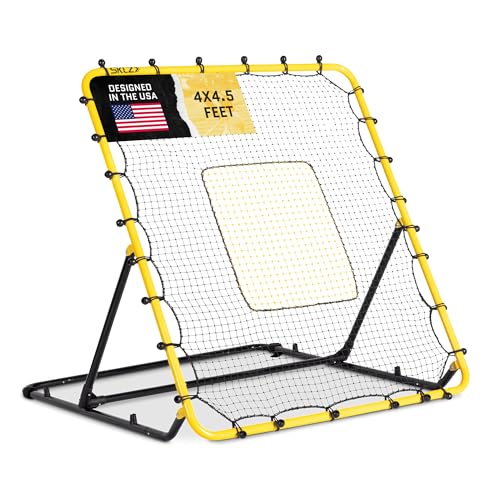
3. SKLZ Fielding Trainer Rebounder – Best baseball rebounder for infield drills
Not every player needs a full-size rebound net. If your real goal is to work on glove presentation, short hops, quick hands, and reaction speed, the SKLZ Fielding Trainer style makes a lot of sense.
This kind of trainer is especially good for infielders because it keeps the drill focus tight. You are not just throwing into a big screen and chasing random caroms. You are working on shorter, sharper fielding patterns. That makes it useful for middle infielders, third basemen, pitchers fielding their position, and even catchers doing hand-speed work.
The compact format is also a big advantage if you do not have much space. Full-size rebounders are great when you have a yard, driveway, or open practice area. But plenty of families are working with smaller spaces. A more compact fielding trainer lets you get meaningful reps without needing a huge footprint.
It is also easier to pull out for short sessions. That matters because the best training gear is the gear people actually use. If a rebounder takes too long to move, set up, or position, it gets skipped. SKLZ-style trainers are good for “give me 10 minutes of clean reps” sessions, which often end up being more realistic than long planned workouts.
The limitation is range. You are not getting the same versatility you would from a bigger adjustable rebound net. This is more specialized. But for infield work, that specialization is part of the appeal.
- Best for: infielders, short-hop work, smaller practice spaces
- Style: compact fielding trainer
- Why it made the list: excellent for focused glove work and reaction training
See Reviews →
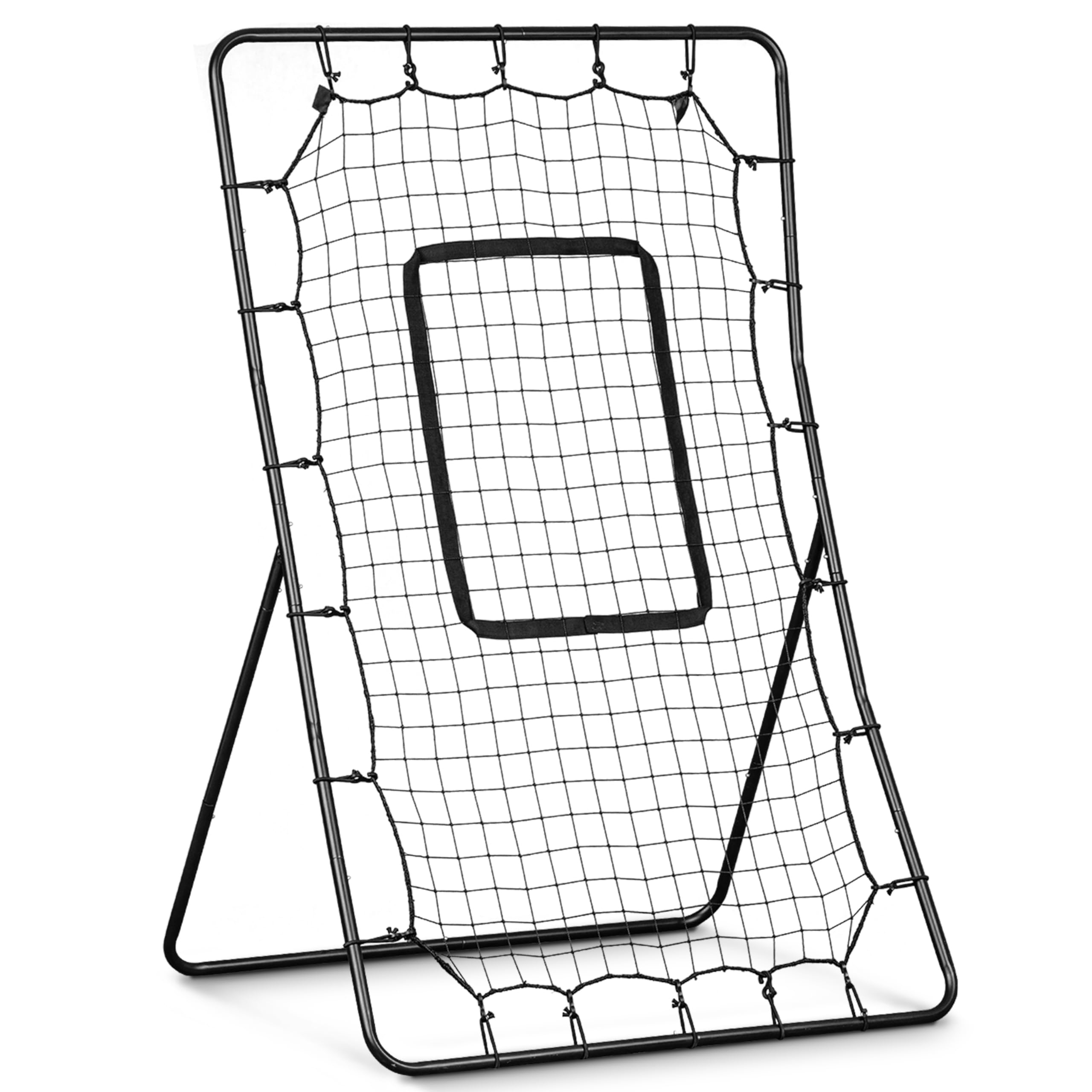
4. GoSports Baseball Rebounder – Best budget value
The GoSports rebounder is the value play in this category. It is not the strongest trainer here, and it is not the most premium. What it does well is give you a useful amount of size and functionality without forcing you into premium pricing.
That is a real sweet spot for a lot of buyers. Maybe you want something more substantial than a tiny trainer, but you are not ready to pay Rukket money. Maybe you are outfitting a younger player, or maybe you just want something reliable for occasional home reps. That is where GoSports fits.
It usually offers enough frame size to make drills feel realistic, while still being manageable in a garage, backyard, or side yard. Adjustable angle settings help too, because one fixed rebound pattern gets old fast. Being able to vary the hop or return angle makes the trainer more useful over time.
This is the kind of pick I like for practical households. It is not the one you buy because you want the most elite-looking equipment in the neighborhood. It is the one you buy because it gives you enough function to matter and a price that does not feel silly.
The compromise is durability under really heavy use. If you are hitting it hard several times a week for months, premium equipment will usually age better. But for value, GoSports is one of the better answers.
- Best for: budget-minded buyers, home practice, younger players growing into reps
- Style: adjustable rebound net
- Why it made the list: strong size-to-price value without getting too cheap
Check Price →
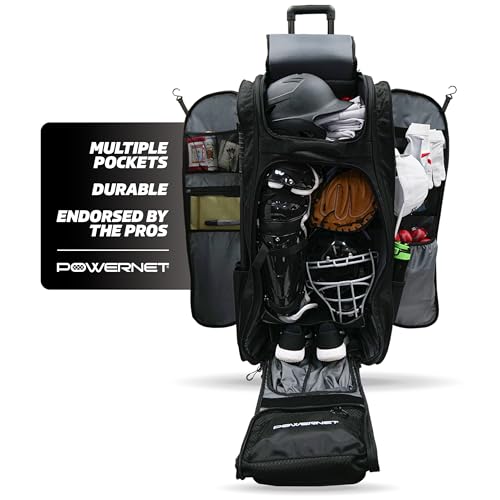
5. PowerNet Baseball Rebound Net – Best for serious solo practice
PowerNet has a strong reputation in baseball training gear because the brand tends to understand what repeated solo practice actually looks like. Their rebound net style is a good option for players who want regular reps and also care about portability.
That combination matters more than it sounds. Some rebounders are fine once they are fully set up but annoying to move, store, or transport. PowerNet gear is usually designed with portability in mind, which makes it a more realistic choice for players who train in different places – backyard one day, team facility the next, park the day after that.
It is also a smart pick for baseball families who already use portable training gear and want the rebounder to fit that same style. If you are used to setting up nets, folding gear down, and moving practice around, PowerNet tends to slot into that system more naturally than bulkier fixed-frame options.
In terms of rep quality, it gives you enough realism to matter for solo work. You are not going to fully replace live fungoes or partner drills with any rebounder, but you can absolutely sharpen your first step, glove angle, hands, and rhythm. That is where PowerNet earns its place here.
The downside is that it may not feel as tank-like as the heaviest premium frame options. But if your priority is training consistency and portability together, it is a very smart choice.
- Best for: frequent solo practice, portable setups, multi-location training
- Style: portable rebound net
- Why it made the list: useful rep quality with better portability than bulkier alternatives
See Current Price →
How to choose the right baseball rebounder
The best baseball rebounder depends on who is using it and what kind of reps you actually want.
If you want an all-around trainer for a range of ages and basic baseball use, choose a full-size adjustable rebound net. That is why Franklin is the best overall pick. It is flexible enough for general fielding practice without forcing you into premium pricing.
If you are buying for an older travel-ball or high school player who will use it a lot, move up to a heavier-duty frame. That is where Rukket makes more sense.
If you mainly care about infield work – short hops, hands, transfer speed, and reaction reps – a compact fielding trainer like SKLZ is often the better buy than a larger generic rebounder.
If you need something affordable and useful for a younger player or family practice area, the GoSports approach is usually enough.
And if you want something you can move around easily without turning setup into its own workout, PowerNet is the better direction.
What matters most in a baseball rebounder
Rebound quality: This is the whole point. A rebounder should return the ball with enough pace and consistency to create useful reps, not limp dead balls back at your feet.
Frame stability: If the unit shifts, rocks, or tips easily, the drills get worse fast. Stability matters more than gimmicks.
Angle adjustment: One angle gets repetitive. Adjustable setups give you more ground-ball, short-hop, and reaction variety.
Size: Bigger is not always better. A full-size rebounder is more versatile, but compact trainers can be better for focused infield work.
Portability: If you cannot move or store it easily, you may end up using it less than you expected.
Common mistakes people make when buying a baseball rebounder
Buying the biggest one without thinking about space. A rebounder that barely fits the area is not automatically more useful. If it is awkward to set up or forces weird throwing angles, it becomes less effective.
Underbuying for an older player. Cheaper rebounders can be fine for younger kids, but harder throws expose weak frames quickly. If the player is strong and the trainer will get real use, durability matters.
Ignoring drill purpose. A general rebound net is not always the best choice if your real focus is quick infield hops and hand-speed work. Sometimes the smaller, more specialized trainer is the smarter buy.
Assuming “more bounce” is always better. Wild rebounds are not the same as useful rebounds. You want challenging returns, not chaos.
Thinking it replaces all other fielding work. A rebounder is a rep tool, not a full substitute for live reads, footwork patterns, or game-speed practice. It is best as part of a larger training setup, not the whole thing.
Frequently asked questions
What is the best baseball rebounder?
For most players, the best baseball rebounder is the Franklin Sports Baseball Rebounder Net because it balances price, durability, and overall usefulness better than most alternatives. If you want a more premium build, the Rukket is the stronger option.
Are rebounders good for baseball practice?
Yes. Rebounders are great for solo baseball practice, especially for fielding, glove work, first-step reactions, and short-hop reads. They are one of the easiest ways to get extra reps without needing a coach or teammate.
What size rebounder is best for baseball?
That depends on the drill type. Larger rebounders are better for general fielding practice and broader use. Smaller trainers are better for focused infield work and tighter spaces. Most families do best with a medium-to-large adjustable rebounder unless they know they specifically want a compact infield trainer.
Can a baseball rebounder help infielders?
Absolutely. Infielders can use rebounders for short hops, bad hops, glove presentation, hands, and reaction speed. A compact trainer like the SKLZ style is especially good for this kind of work.
Is a baseball rebounder worth it for youth players?
Yes, if it will actually get used. For youth players, a rebounder can help build comfort with hops and glove work in a lower-pressure setting. Just make sure you choose one that matches the player’s age, strength, and available practice space.
Final verdict
If you want the cleanest answer, buy the Franklin Sports Baseball Rebounder Net. It is the best baseball rebounder overall because it does the most things well for the most players.
If you want the strongest long-term training option, go with the Rukket Baseball/Softball Rebounder. If your focus is middle-infield style glove work and quick hands, the SKLZ Fielding Trainer is the sharper tool. If budget matters most, the GoSports Baseball Rebounder gives you the best value. And if portability matters almost as much as rep quality, the PowerNet Baseball Rebound Net is the smart pick.
The right rebounder is the one that gives you more reps, more often. That is really the whole game here.