A good glove is a relationship. You break it in, you shape it, you sweat into it, you drag it through dirt, and then you expect it to keep working—season after season. The problem is leather isn’t indestructible. It dries out, it stiffens, it cracks, and it can get heavy or sloppy if you over-oil it. That’s where the best baseball glove conditioner matters: it helps keep the leather flexible, protected, and game-ready without ruining the shape you worked so hard to build.
This guide covers 5 picks that match the most common glove needs: a classic all-around conditioner, a pro-style conditioner, a value-friendly option, a “strong oil” style for serious softening, and a specialty modern conditioner. You’ll also get practical advice on how often to condition, what to avoid, and how to pick the right product for your glove and climate.
FTC Disclosure: This article contains affiliate links. If you buy through these links, we may earn a commission at no extra cost to you.
Quick picks: Best baseball glove conditioners (comparison table)
| Pick | Best for | Type | What it does best | When to use | Amazon link |
|---|---|---|---|---|---|
| Nokona NLT Classic Leather Glove Conditioner | Best overall (balanced conditioning) | Cream/conditioner | Moisture + softness without going greasy | Regular maintenance; light break-in support | Amazon PDP |
| Wilson Pro Stock Glove Conditioner | Best “classic pro shop” choice | Conditioner | Easy maintenance; keeps leather from drying out | In-season upkeep and preseason refresh | Amazon PDP |
| Rawlings Glove Conditioner / Glove Care | Best value for most players | Conditioner | Simple conditioning and preservation | Routine care for youth to adult gloves | Amazon PDP |
| Mizuno Strong Oil Glove Conditioner | Best when your glove is stiff/dry | Oil/conditioner | Softening power (use sparingly) | Targeted break-in or rescuing dry leather | Amazon PDP |
| Ball Player’s Balm (2 oz) | Best modern “balm” style conditioner | Balm/conditioning blend | Light conditioning and feel (often used sparingly) | Maintenance + touch-up feel | Amazon PDP |
Best baseball glove conditioner (5 picks)
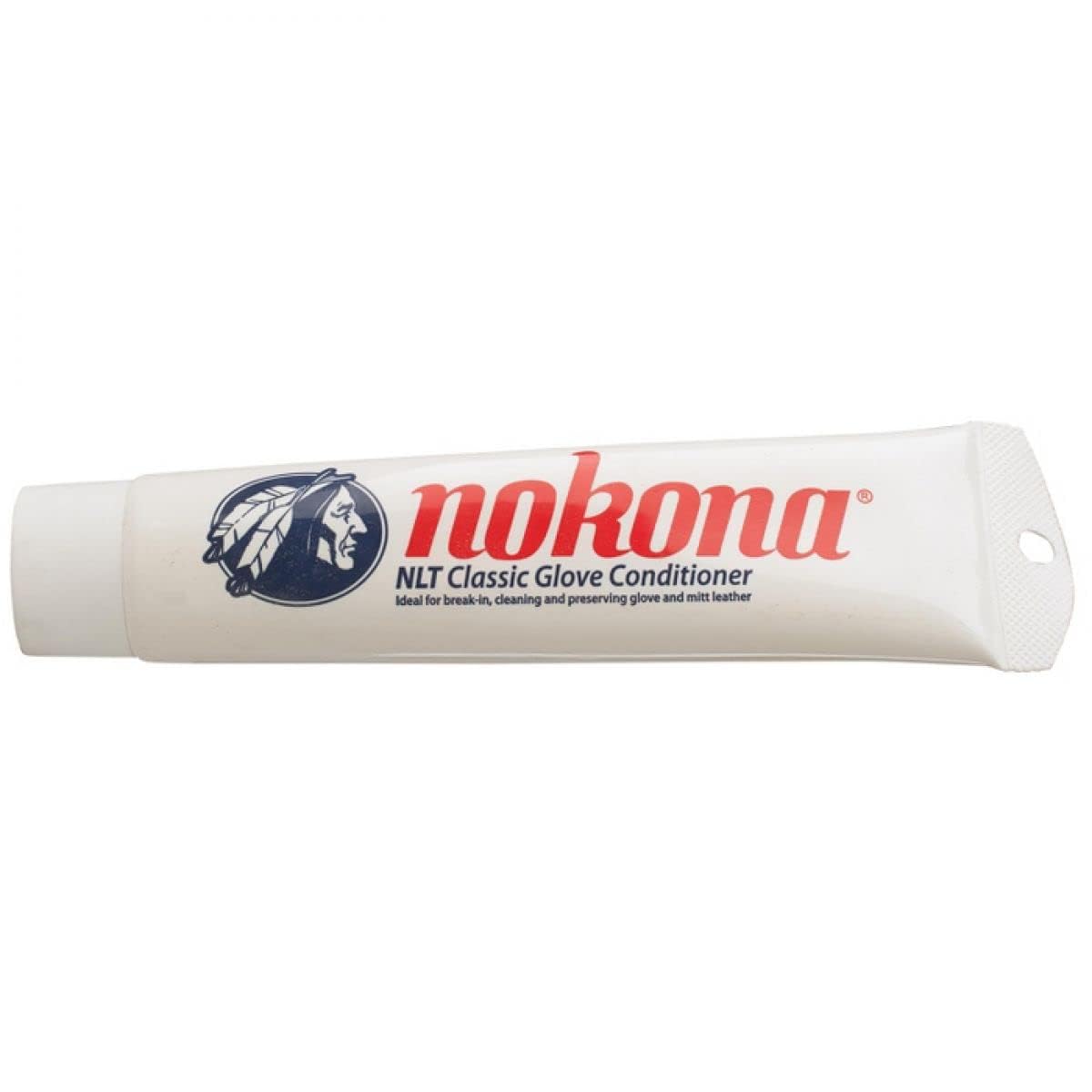
1) Nokona NLT Classic Leather Glove Conditioner — Best overall
If you want one glove conditioner that covers most use cases—keeping leather from drying out, maintaining flexibility, and supporting a controlled break-in—Nokona’s classic conditioner is a go-to. It’s widely used and recommended because it tends to condition without turning your glove into an oily, heavy mess.
Why it’s the best overall pick:
- Balanced conditioning: Helps restore moisture and pliability without feeling overly greasy.
- Great for maintenance: Ideal for keeping a broken-in glove in the “sweet spot” of flexible but not floppy.
- Safe choice for most gloves: Works well for infield gloves, outfield gloves, first base mitts, and catcher’s mitts when used correctly.
Best for: Players who want a single, reliable conditioner for regular glove care and light break-in support.
How to use it well: Use a small amount on a clean cloth, work it into the leather lightly, then wipe off excess and let it absorb overnight. More is not better.
Check price on AmazonOpens Amazon. Affiliate link.
2) Wilson Pro Stock Glove Conditioner — Best “classic pro shop” conditioner
Wilson’s Pro Stock glove conditioner is one of those products that’s been around forever in dugouts and equipment rooms. It’s the kind of conditioner you can keep in your bag and use as consistent maintenance: a little bit to keep the leather healthy, not a heavy oiling that changes the glove’s character.
Why it’s a strong pick:
- Simple, familiar results: Helps keep leather from drying out and stiffening mid-season.
- Easy to apply: Great for players (or parents) who don’t want a complicated process.
- Good for routine care: Especially useful when weather swings (cold games, dry indoor storage, etc.).
Best for: In-season maintenance and preseason “wake up” conditioning.
Watch-outs: Don’t use it like a break-in shortcut by overapplying. Conditioning is about leather health; break-in is about shaping and reps.
Check price on AmazonOpens Amazon. Affiliate link.
3) Rawlings Glove Conditioner / Glove Care — Best value for most players
If you’re buying glove conditioner for a household (kids playing multiple seasons, travel ball schedules, or just a player who wants a simple product from a major brand), Rawlings glove care products are a practical choice. They’re usually easy to find, easy to use, and priced in a way that makes routine glove care more likely to actually happen.
Why it’s the value pick:
- Affordable routine care: Makes it easier to condition on a schedule instead of “only when the glove is dying.”
- Easy application: Works well for quick post-season or preseason maintenance.
- Good for most glove types: Useful across common baseball and softball gloves when applied lightly.
Best for: Most youth and adult players who want straightforward glove maintenance without premium pricing.
Watch-outs: Even “safe” conditioners can cause problems if you overdo it. Use thin layers and wipe off excess.
Check price on AmazonOpens Amazon. Affiliate link.
4) Mizuno Strong Oil Glove Conditioner — Best for stiff, dry gloves (use sparingly)
Sometimes a glove doesn’t need gentle maintenance—it needs help. If your glove is stiff from cold weather, dry storage, or long off-seasons, a “strong oil” style conditioner can soften leather faster than light creams. The key phrase is use sparingly. Oils can quickly add weight, attract dirt, and make a glove feel mushy if you apply too much.
Why it’s a good pick in the right situation:
- Softening power: Helpful when leather is noticeably stiff or dried out.
- Targeted use works well: You can apply small amounts to specific areas (hinge, pocket, laces area) instead of soaking the whole glove.
- Good “rescue” option: Useful for gloves that have been neglected or stored poorly.
Best for: Breaking in stiff leather (carefully) or restoring a glove that’s gone dry and rigid.
Watch-outs: Over-oiling is one of the most common glove-care mistakes. Too much oil can turn a glove heavy and floppy and can shorten its life by breaking down structure.
Check price on AmazonOpens Amazon. Affiliate link.
5) Ball Player’s Balm (2 oz) — Best modern balm-style conditioner
Balm-style conditioners are popular because they’re easy to apply in small amounts and many players use them as a “touch-up” product: a little conditioning, a little feel, and a little protection—without the heavy oil vibe. This kind of product is especially useful when your glove already feels good and you just want to keep it that way.
Why it’s worth considering:
- Easy to control: Balm format encourages light application (which is usually what you want).
- Good for maintenance: Helps keep leather from drying out without majorly changing the glove’s break-in.
- Travel-friendly size: Easy to keep in a gear bag.
Best for: Players who want simple maintenance and prefer a balm-style product they can apply sparingly.
Watch-outs: Any conditioner—balm included—can still be overused. If the glove feels slick or starts attracting dirt, you used too much.
Check price on AmazonOpens Amazon. Affiliate link.
What glove conditioner actually does (and what it doesn’t)
A glove conditioner is meant to maintain leather health:
- Helps prevent drying and cracking
- Keeps the glove flexible
- Supports shape retention (when used correctly)
What it doesn’t do by itself:
- It doesn’t replace real break-in reps (playing catch, mallet work, pocket shaping)
- It doesn’t permanently fix poor storage (glove crushed under gear will still get misshapen)
- It doesn’t make a glove “game ready overnight” without trade-offs
How often should you condition a baseball glove?
This depends on climate, usage, and leather type, but these rules work for most players:
- In-season maintenance: Light conditioning every 4–8 weeks is common if you play often.
- Dry climates / indoor heating: You may need slightly more frequent light conditioning.
- Off-season: Clean it, condition lightly, then store properly (see mistakes section).
The key: Use small amounts. Conditioning should not make your glove heavier, slick, or “wet” feeling.
Comparison: Which type of glove conditioner should you buy?
Not all “conditioners” behave the same. Use this section to choose the right category quickly.
If your glove already feels good (you just want to maintain it)
- Choose a balanced conditioner like Nokona NLT or a classic option like Wilson Pro Stock.
- Goal: prevent drying and keep the glove in the “sweet spot.”
If your glove is stiff, dry, or neglected
- Consider a stronger oil-style product like Mizuno Strong Oil—but use very sparingly and let it absorb overnight.
- Goal: restore flexibility without destroying structure.
If you’re buying for a family or multiple gloves (value matters)
- Choose a mainstream value option like Rawlings Glove Care.
- Goal: make glove care easy enough that it actually gets done.
If you want a simple “touch-up” product you’ll actually use
- A balm-style option like Ball Player’s Balm can be convenient for light maintenance.
Common mistakes when conditioning a baseball glove
- Over-oiling the glove. This is the #1 glove-care mistake. Too much oil adds weight, attracts dirt, and can make the glove floppy.
- Putting conditioner on the laces heavily. Laces can weaken over time if saturated repeatedly. Focus mostly on the leather panels and use light product around laces.
- Using random household oils. Avoid cooking oils or anything not designed for glove leather—these can go rancid or damage leather.
- Conditioning a dirty glove without cleaning first. Conditioning over dirt can grind grime deeper into the leather.
- Using heat to “speed it up.” High heat can damage leather, dry it out, and warp the glove’s structure.
- Storing the glove incorrectly. A perfectly conditioned glove can still get ruined if it’s crushed under gear or stored wet.
How to condition a glove (simple step-by-step)
- Brush off dirt: Use a soft brush or cloth to remove loose dirt and dust.
- Apply a small amount: Put a pea-sized amount on a clean cloth (start smaller than you think).
- Work it in lightly: Focus on dry areas: palm, hinge, finger backs. Avoid saturating laces.
- Wipe excess: If it looks shiny or feels slick, you used too much—wipe it off.
- Let it absorb: Leave it overnight at room temperature.
- Re-shape the pocket: Put a ball in the pocket and wrap/store properly so the shape stays consistent.
Q&A: Best baseball glove conditioner
What is the best baseball glove conditioner?
For most players, a balanced conditioner like Nokona NLT Classic Leather Conditioner is a great all-around choice because it conditions without feeling overly greasy when used correctly.
How often should I condition my baseball glove?
Many players condition lightly every 4–8 weeks during the season, then do a light offseason conditioning before storage. If you live in a very dry climate or store gear in heated indoor air, you may need more frequent light conditioning.
Can glove conditioner help break in a glove?
It can help support break-in by keeping leather workable, but real break-in comes from shaping, playing catch, and targeted pocket work. Overusing conditioner to “break it in faster” often ruins the glove by making it heavy or floppy.
What’s the best glove conditioner for a stiff glove?
If the glove is very stiff or dry, a stronger oil-style product like Mizuno Strong Oil can help—but use it sparingly and give it time to absorb.
Is glove oil bad for baseball gloves?
Oil isn’t automatically “bad,” but too much oil is. Heavy oiling can add weight, attract dirt, and break down structure over time. For most gloves, light conditioning is better than heavy oiling.
What’s the best budget glove conditioner?
A mainstream option like Rawlings Glove Care is a practical value pick for routine conditioning.
Bottom line
The best baseball glove conditioner is the one you’ll use correctly: light application, consistent maintenance, and no over-oiling. For most players, start with Nokona NLT as a balanced all-around conditioner. If you want a classic, widely trusted option, Wilson Pro Stock is a solid pick. If you need to soften a stiff glove, use Mizuno Strong Oil sparingly.
Condition lightly, store properly, and your glove will stay game-ready far longer than it will with “shortcut” methods.